Show summary Hide summary
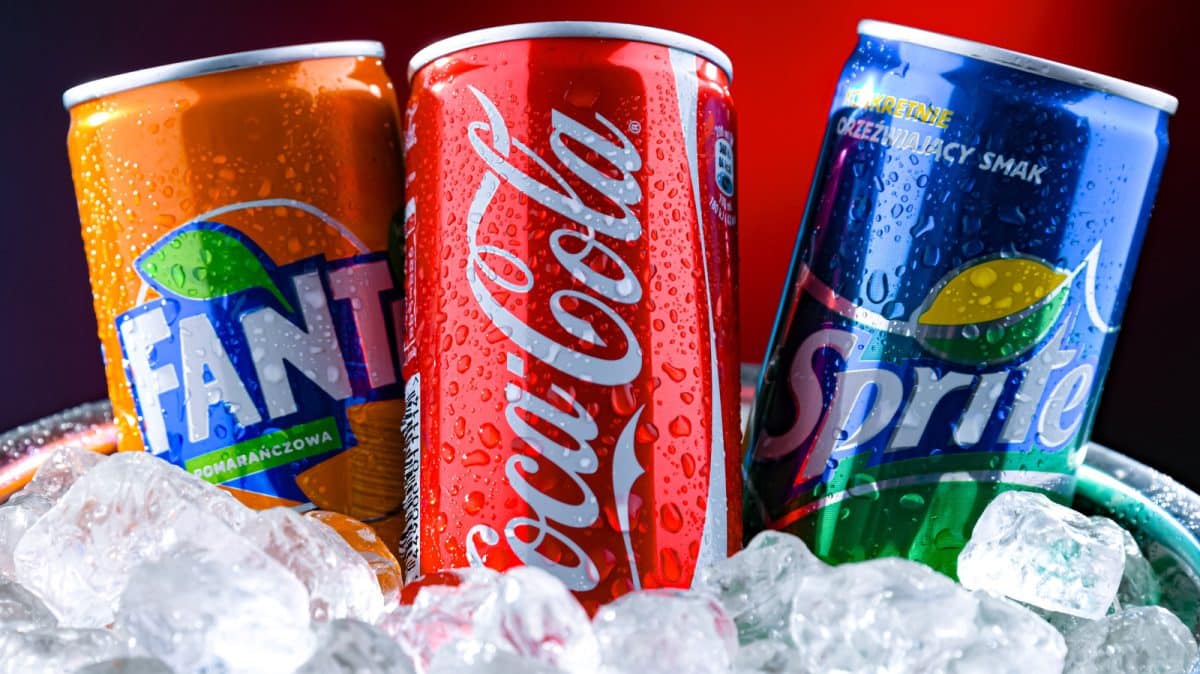
Everyone knows Coca‑Cola for the signature soda, but the company’s reach now extends across coffee, bottled water, juices, functional beverages and even hard seltzers — moves that matter for shoppers, store shelves and rival brands alike. Recent rollouts and acquisitions show Coca‑Cola pursuing growth in health‑oriented drinks, ready‑to‑drink coffee and sparkling water, reshaping a portfolio that few people associate with the soft drink alone.
Coca‑Cola began as a single carbonated recipe in the late 19th century, yet today it controls dozens of distinct beverage labels around the world. Some of those names were launched by the company, while others arrived through acquisitions that let Coca‑Cola enter new categories or strengthen its position against competitors such as PepsiCo.
Costa Coffee
Caramel, butterscotch, toffee: how their differences affect your desserts
McDonald’s rebrands Twitter to honor Bubba Wallace after his first NASCAR Cup win
Costa Coffee marked Coca‑Cola’s largest step into hot beverages when the company purchased the U.K. chain in 2018 for roughly $5.1 billion. The buy gave Coca‑Cola an immediate retail footprint in Europe and a foothold in the fast‑growing ready‑to‑drink and in‑store coffee market.
Fairlife
Targeting shoppers focused on nutrition, Fairlife produces ultra‑filtered, higher‑protein dairy drinks. Coca‑Cola initially bought a stake and completed full ownership in 2020, reflecting a broader pivot toward beverages that compete on health credentials rather than just taste.
Minute Maid
One of Coca‑Cola’s earliest entries beyond fizzy drinks, Minute Maid became part of the company in 1960 after starting life as a frozen orange concentrate. It later evolved into chilled juices and remains a core asset in Coca‑Cola’s non‑carbonated lineup.
Simply Orange
Introduced in 2001 to meet demand for not‑from‑concentrate juices, Simply Orange expanded Coca‑Cola’s portfolio where consumers were moving away from concentrates toward fresher options. The brand later broadened into other fruit juices and functional drinks.
Gold Peak
Created by Coca‑Cola in 2006 to capture a share of the iced‑tea market, Gold Peak blends brewed tea positioning with mainstream retail availability. In 2025 the company introduced products combining the Gold Peak and Simply brands into juice‑tea hybrids, reflecting continued product experimentation.
Fuze
Acquired in the late 2000s, Fuze brought Coca‑Cola an international portfolio of flavored teas and functional waters. While Gold Peak has been aimed largely at U.S. consumers, Fuze strengthened the company’s reach overseas and diversified its still‑beverage offerings.
Powerade
Launched in 1988 as Coca‑Cola’s answer to sports drinks, Powerade has grown into the company’s primary isotonic brand. Although it trails Gatorade in U.S. market share, Powerade remains a significant competitor in sports‑nutrition retail segments.
Vitaminwater
Paid handsomely in 2007 for Glacéau, Coca‑Cola invested in Vitaminwater to capture demand for vitamin‑enhanced bottled beverages. The brand later faced legal scrutiny over labeling claims and required label changes following a class‑action settlement.
Dasani
Dasani was introduced in 1999 to directly compete with other bottled waters. The brand underscores Coca‑Cola’s strategy of matching rivals across product categories and keeping pace in the lucrative bottled‑water market.
Fresca
Originally launched in the 1960s as a zero‑calorie citrus soda, Fresca has been repositioned in recent years for mixology and adult beverage trends. Coca‑Cola has expanded the label into spirit‑based and malt‑based extensions as consumer drinking habits diversify.
Topo Chico
Topo Chico is a mineral water with deep Mexican roots that Coca‑Cola bought in 2017 for about $220 million. Since acquisition, the brand has been scaled in the U.S., and Coca‑Cola used Topo Chico as the basis for a hard seltzer line in 2020.
Barq’s
Barq’s root beer, founded at the end of the 19th century, became part of Coca‑Cola several decades later and remains a regional staple in parts of the American South. The brand illustrates Coca‑Cola’s long history of absorbing established soda names.
| Brand | Category | How it joined Coca‑Cola | Recent or notable development |
|---|---|---|---|
| Costa Coffee | Coffee chain / RTD coffee | Acquisition (2018) | Expanded global retail presence and RTD distribution |
| Fairlife | High‑protein milk | Full acquisition (2020) | Positioning toward wellness and protein‑focused consumers |
| Minute Maid | Fruit juice | Acquisition (1960) | Core chilled‑juice offering |
| Simply Orange | Not‑from‑concentrate juice | Launched by Coca‑Cola (2001) | Broadened into other juices and prebiotic drinks |
| Gold Peak | Iced tea | Launched by Coca‑Cola (2006) | Combined with Simply in juice‑tea hybrids (2025) |
| Fuze | Flavored tea / functional drinks | Acquired (2007 era) | Strengthened international still‑beverage lineup |
| Powerade | Sports drink | Launched by Coca‑Cola (1988) | Continues to compete with market leader Gatorade |
| Vitaminwater | Enhanced water | Acquisition (2007) | Underwent label changes after legal challenges |
| Dasani | Bottled water | Launched by Coca‑Cola (1999) | Part of bottled‑water rivalry with PepsiCo |
| Fresca | Citrus soda / mixers | Launched by Coca‑Cola (1964) | Expanded into alcoholic extensions (2022–2026) |
| Topo Chico | Sparkling mineral water | Acquisition (2017) | Extended into hard seltzer and broader U.S. rollout |
| Barq’s | Root beer | Acquisition (mid‑1990s) | Remains a regional favorite in parts of the U.S. |
What does this diversification mean for consumers? For one, shelf space and marketing dollars are increasingly allocated across a wider range of beverage types — from functional milks to sparkling mineral waters and RTD coffee — giving shoppers more choice but also intensifying brand competition. Retail buyers and distributors must balance established soda sellers with faster‑growing categories such as bottled water and wellness drinks.
For rivals, Coca‑Cola’s acquisitions and new product launches are calculated moves to neutralize threats and capture growth areas. Expect more cross‑brand experiments, climate and sustainability messaging, and entry into adult beverage formats as Coca‑Cola leverages its global bottling and distribution network.
Watch the company’s next steps in the coming months: further product extensions, regional rollouts of successful concepts, and possible deals that fill gaps in categories where Coca‑Cola still plays catch‑up. For consumers, that will likely mean familiar names appearing in new formats and on new parts of the store shelf.
Irish whiskey: approachable bottles new drinkers should try today
Fishtown restaurants ranked: must-visit spots locals are raving about