Show summary Hide summary
A full pot of soup stored in the freezer can be the difference between a frantic takeout order and a calm, nourishing dinner. With pressure on time and grocery budgets, freezing homemade soup turns a single cooking session into several reliable meals—fast, economical, and less wasteful.
Why freezing soup matters now
Between busy schedules and fluctuating food prices, ready-made meals at home are more valuable than ever. A stash of frozen soups gives you control over ingredients, portions, and cost—while cutting down on food waste.
Prince Edward Island food crawl: 3-day must-eat map for visitors
Freezer-friendly soups to stash now: meal relief for hectic weeknights
It also matters for health: a homemade soup frozen soon after cooking usually beats store-bought ready meals for both nutrition and sodium content. That practical advantage is what makes soup worth batch-cooking this week.
What to freeze — and what to skip
Not every soup behaves the same under cold storage. Choose recipes that keep texture and flavor after freezing, and treat delicate components separately.
- Great for freezing: hearty bean and lentil soups, vegetable stews, brothy meat-and-veg soups, and tomato-based soups. These maintain texture and deepen in flavor over time.
- Freeze with caution: cream-based soups—if frozen—often separate. Consider freezing them without dairy and stirring in cream, yogurt, or milk when reheating.
- Best avoided: soups heavy on pasta, rice, or potatoes can become mushy. If you plan to freeze, cook those starches al dente or add them fresh at reheat.
Small components such as herbs, cooked grains, or dairy are often better stored separately and added after thawing so the final dish feels freshly made.
Practical freezing steps
Follow a simple routine to protect taste and texture. Rapid cooling and airtight storage are the two most important factors.

- Cool quickly: transfer soup to shallow containers to bring the temperature down within two hours.
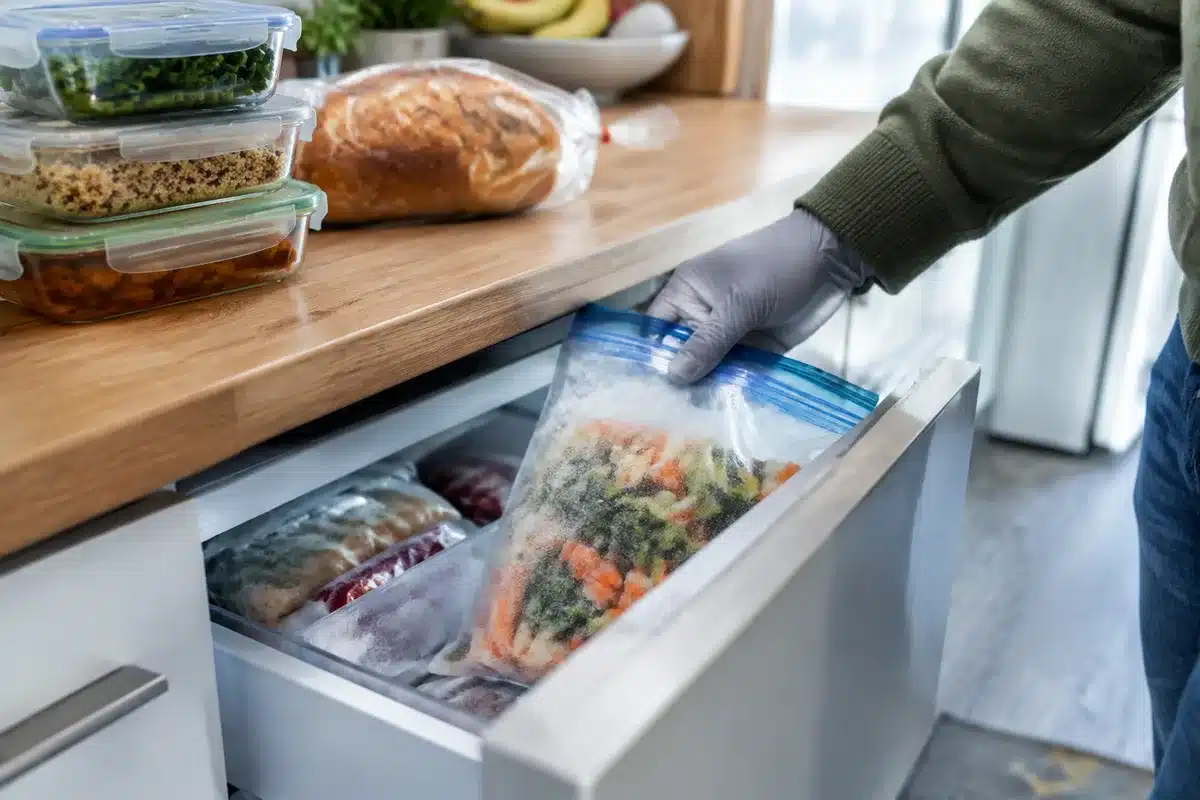
- Choose the right container: use freezer-safe jars, rigid plastic containers, or heavy-duty freezer bags. Remove as much air as possible to prevent freezer burn.
- Label clearly: include the name and date. For best quality, plan to use within about three months.
- Portion for convenience: freeze single or family-size portions so you only thaw what you need.
- Consider vacuum sealing: for longer storage and better flavor protection, vacuum-sealed bags are ideal.
Thawing and reheating—do it safely
Move frozen soup from the freezer to the refrigerator the night before for a gentle thaw. If you’re short on time, place sealed bags in cold water or reheat straight from frozen in a pot over low heat, stirring often.
When reheating, bring soups to a steady simmer to ensure safety. If you froze soups without dairy, add cream or yogurt near the end of reheating to prevent curdling. For chunkier soups, a short simmer helps revive texture without overcooking.
Quick troubleshooting
- If a soup tastes flat after freezing, a squeeze of lemon or a splash of vinegar brightens flavors.
- For separated cream soups, a whisk or brief blending while warming brings everything back together.
- Overly salty soup can be balanced by adding diced cooked potato while reheating—the potato absorbs some salt, then remove before serving.
Freezing soup is a small habit that pays off repeatedly: fewer last-minute grocery runs, faster weeknight dinners, and a reliably nourishing meal on demand. Try doubling a favorite recipe next time you cook—your future self will notice the difference.
Krispy Kreme free dozen doughnuts: score yours on World Gratitude Day
Cocktail trends 2026: 7 shifts that will change what you order this year