Show summary Hide summary
This Thanksgiving can feel manageable instead of overwhelming if you shift the work off a single frantic afternoon. Small changes in planning and a few reliable shortcuts will keep the meal on track and preserve the holiday for hosts and guests alike.
Below are practical, editor-tested approaches to reduce stress, protect food safety, and still deliver a memorable dinner — including a compact timeline you can follow and quick fixes for common problems.
Start with priorities, not perfection
Decide which elements matter most to you: the centerpiece turkey, a heirloom side, or simply having everyone at one table. Treat the rest as negotiable. Prioritizing early lets you channel energy into what will actually be remembered.
Lebanese cafe arrives in downtown Santa Monica: chef Charbel Hayek launches relaxed eatery
Thanksgiving shortcuts: 9 pro-tested ways to save time and ditch kitchen stress

For many hosts, that means choosing a simpler main course, or relying on one standout dish and supplementing with easier sides or store-bought components that you can finish at home.
Practical planning: a flexible timeline
Use timing to your advantage. Below is a straightforward schedule that scales whether you’re feeding six or twenty. It separates tasks by day and gives you breathing room the morning of the meal.
| When | Tasks | Why it helps |
|---|---|---|
| 3–4 days before | Buy perishables, brine or season the bird, wash produce, prepare stocks | Reduces last-minute shopping and lets flavors develop |
| 1 day before | Make casseroles and desserts, chop veg, assemble cold salads | Frees oven and adds calm on the day |
| Morning of | Roast turkey or main, reheat make-ahead sides, set table | Concentrates hot cooking in a predictable window |
| 1–2 hours before | Finish quick sides, carve turkey, hold food at safe temps | Allows plating and final touches without racing the clock |
| Serving | Bring hot dishes to table, encourage serving in rounds | Keeps plates hot and reduces crowding in the kitchen |
Delegate and simplify
Sharing tasks doesn’t diminish your role as host; it makes the event possible. Ask guests to bring a dish, or assign specific jobs like drinks, bread, or the salad. Provide simple guidelines (oven-safe dish, preheated if needed) to avoid extra work.
If someone offers to help in the kitchen, give them a concrete task: carve the turkey, tend the gravy, or manage the timer. Clear requests are easier to accept than vague offers like “let me know if you need anything.”
Make-ahead wins
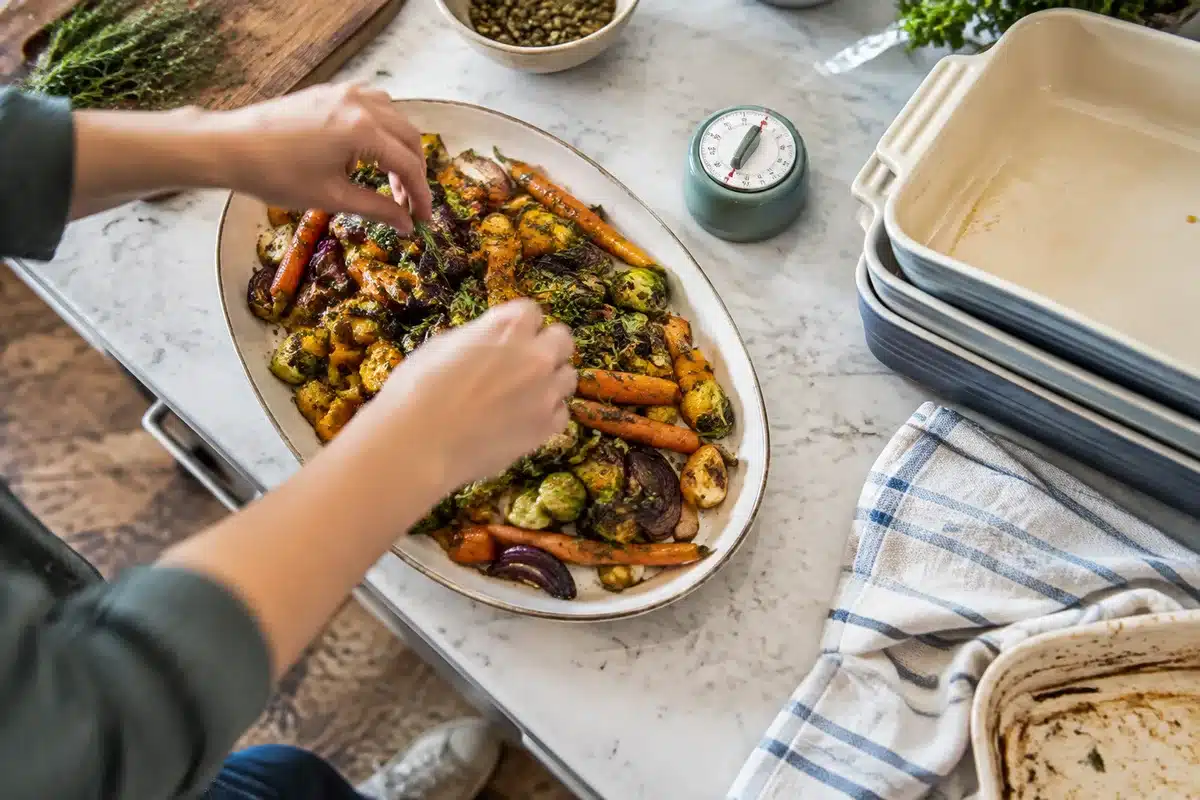
Many dishes not only survive but improve with resting time. Gravy, cranberry sauce, many casseroles, and pies benefit from being made a day or two ahead. Use refrigeration strategically to stagger work and reduce oven demand.
For hosts short on oven space, think stovetop or slow cooker sides, and reheat items in a low oven or in covered dishes to keep them moist.
Food safety and serving
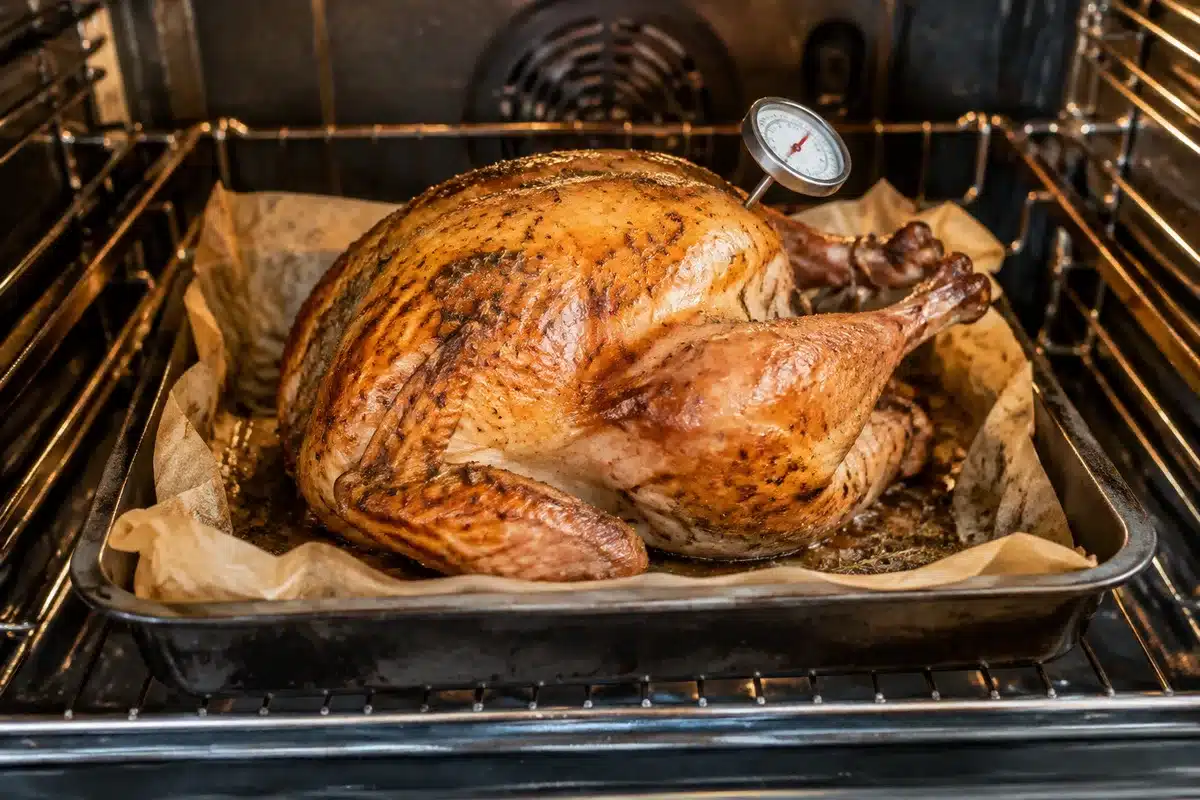
Keep perishable items chilled until service and use a food thermometer for the turkey; the US Food Safety standard is 165°F in the thickest part. If dishes sit out for long, rotate trays back to the oven or fridge to avoid the two-hour danger zone.
Encourage family-style or plated serving in waves to prevent crowding and allow food to remain at safe temperatures. If guests will be serving themselves, place small warming trays or insulated containers on the table.
Quick fixes: common problems and fast answers
- Dry turkey: Slice and serve with gravy; a light brushing of melted butter or a pan sauce can restore moisture.
- Cold sides: Reheat covered in a 325°F oven for 10–20 minutes or microwave in short intervals, stirring between bursts.
- Overcrowded oven: Use two racks strategically, roast items at slightly different temperatures and stagger finish times.
- Last-minute guest with restrictions: Keep a simple grain or vegetable option available — quinoa, roasted root veg, or a basic green salad are quick to prepare.
- Forgot dessert: Serve warmed fruit with yogurt or ice cream, or slice and dress sturdy store-bought cake with fresh berries.
These are quick, implementable solutions — not culinary panaceas. They give you options so the meal stays enjoyable even when things shift.
Perspective for hosts
Expectations shape stress. Reframing the holiday from a performance to a shared occasion removes pressure: guests come for company more than perfection. Plan key moments — the arrival of family, a toast, or a shared activity — and allow the food to support those moments rather than compete with them.
Finally, pack a few spare essentials (foil, extra serving spoons, an oven-safe platter) and accept that some improvisation is part of the day. A well-structured plan plus a handful of reliable fallbacks keeps Thanksgiving manageable and memorable for the right reasons.
Chick-fil-A peach milkshakes pop up on menus this summer: grab them while they last
Pepsi faces fallout from 13 costly misfires: what consumers and investors should watch