Show summary Hide summary
Learning to crack an egg with one hand is a small, practical skill that adds speed and polish to everyday cooking—especially useful when your other hand is busy or covered in dough. With short-form recipe videos and quick home-cooking routines still trending, the move is as relevant for efficient meal prep as it is for a confident kitchen presence.
Why this technique matters now
Beyond the showy appeal, a reliable one-handed crack has real utility: it can be faster than a two-handed split, keeps the other hand free, and—when done correctly—reduces the chance of shell fragments falling into the bowl. For cooks who batch-prepare or film themselves, the method saves time and improves camera-friendly consistency.
Sushi salon draws diners with must-try fish creations
9 homemade savory pies to try now: ditch frozen for real flavor
That said, this is a practical skill, not a stunt. Clean technique and food-safety awareness are essential: always wash hands after handling raw eggs and avoid consuming mixtures that contain raw egg unless you know the eggs are safe for raw use.
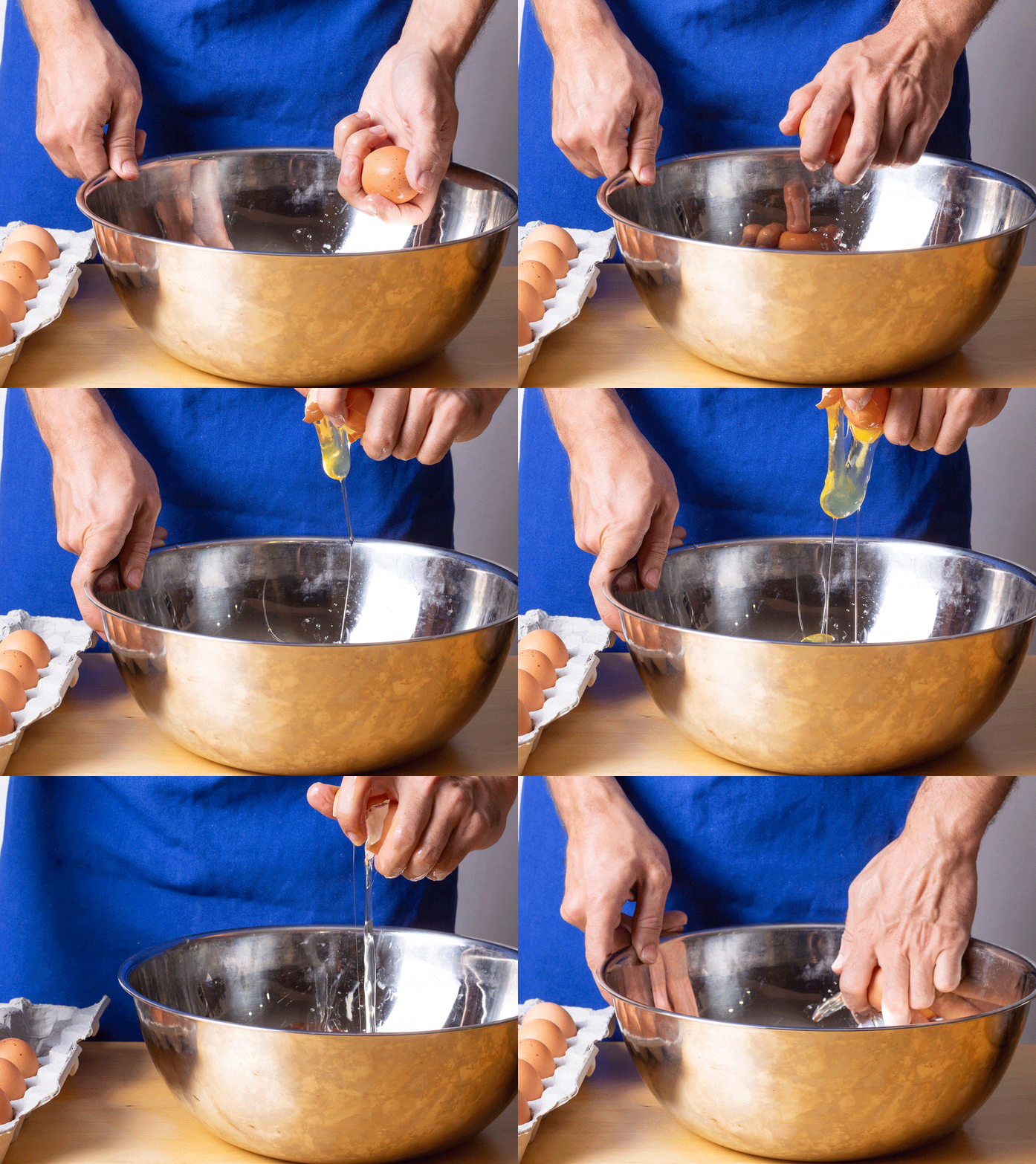
How to crack an egg with one hand: step-by-step
Start slowly; the motion is a coordination exercise that becomes fluid with a little practice. The instructions below favor minimizing shell shards while giving you control over the yolk.
- Prepare your work area. Use a small bowl or the rim of a bowl placed on a stable surface. Have a separate catcher or ramekin if you’re separating eggs or checking for shell pieces.
- Tap for a clean fracture. Tap the egg sharply on a flat surface or the bowl rim to make a single, decisive crack. A flat surface tends to produce fewer shards than a thin edge.
- Insert your thumb. With the crack facing you, push your thumb gently into the fracture and use a quick outward twist to separate the shell into two halves.
- Release the contents. Tilt the halves and let the white and yolk slide into the bowl; practice a smooth, controlled motion rather than jerking the wrist.
Short repetition helps. The first attempts may spill or leave tiny shell bits; slow the movement until you have the rhythm.
Troubleshooting and common pitfalls
| Problem | Quick fix |
|---|---|
| Shell fragments in the bowl | Tap the egg on a flat surface next time; use a larger bowl and fish out pieces with a larger shell half or a clean spoon. |
| Yolk breaks on contact | Hit with a gentler tap and open more slowly; aim for a single, centered crack rather than multiple fractures. |
| Feels awkward or unsteady | Practice with hard-boiled eggs first to learn the motion without wasting raw eggs. |
Pro tip: If you’re preparing dishes where raw egg safety matters—home mayonnaise, certain custards—use pasteurized eggs or stick to two-handed control until you’re confident.
Some cooks still prefer the two-handed split for sheer reliability, and that’s perfectly fine. The one-handed technique is a convenience and presentation skill: useful for speeding up prep, keeping one hand available, or achieving a cleaner, more consistent crack for on-camera recipes.
Practice in small sessions, keep your work surface tidy, and prioritize food safety over flair. With a few tries, the motion becomes second nature—and it can make routine cooking feel a bit more efficient and composed.
Carvel Hocus Pocus milkshakes hit shelves to kick off Halloween countdown
Costco Kirkland Sauvignon Blanc: New Zealand producer behind the popular Marlborough label revealed