
Show summary Hide summary
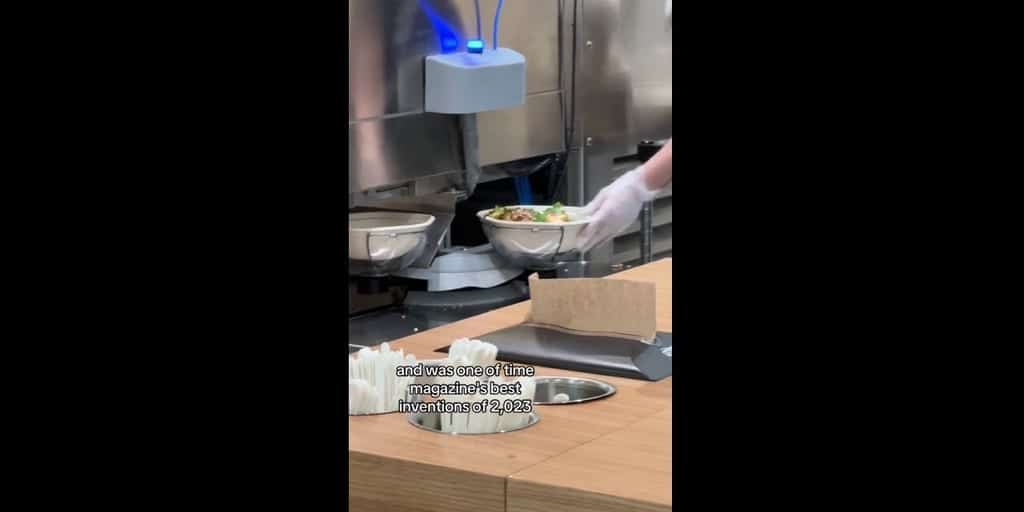
A viral TikTok clip showing a machine assembling a salad at a quick-service restaurant has reignited conversation about automation in fast food — and why it matters now as chains cope with tight labor markets and rising costs. The short video gives a rare glimpse of a compact kitchen device that promises faster service and uniform portions, but it also raises questions about choice, jobs and food safety.
What the clip shows — and what viewers are noticing
The footage, filmed from the customer side of the counter, captures a tabletop unit layering greens, toppings and dressing into a bowl without visible human hands. The device appears to follow a repeatable sequence: dispensing base ingredients, adding measured toppings, and closing with a sealed lid or drizzle of dressing.
On social platforms, the reaction is mixed. Some users praise the speed and neat presentation; others wonder whether such machines limit customization or replace entry-level staff positions. Restaurateurs watching the clip see potential to cut errors and labor hours, while food-safety experts point to both benefits and new oversight needs.
Caramel, butterscotch, toffee: how their differences affect your desserts
McDonald’s rebrands Twitter to honor Bubba Wallace after his first NASCAR Cup win
Why this matters today
Automation in restaurants isn’t new, but momentum has grown as operators confront persistent staffing shortages and higher wage bills. Machines that reliably portion ingredients can reduce waste and speed service during peak hours — a direct operational advantage. At the same time, the trend touches broader concerns: employment opportunities for young and part‑time workers, the future of in-person customer service, and how menus may be redesigned to suit automated systems.
Put simply: this small clip reflects larger shifts across the industry. For consumers, that could mean faster lines and more consistent food. For workers, it may mean changing skill requirements on the floor. For regulators and health inspectors, it signals a need to adapt oversight to new equipment and processes.
Potential benefits and drawbacks
- Consistency: Automated portioning can make each order look and taste the same, reducing customer complaints.
- Speed: Machines can shorten service times during busy periods, improving throughput.
- Cost control: Precise portions reduce ingredient waste and may lower labor expenses over time.
- Customization limits: Complex or highly personalized requests may be harder to accommodate.
- Workforce impact: Routine tasks could be automated away, shifting staff roles toward maintenance and customer-facing service.
- Sanitation and regulation: New equipment requires clear cleaning protocols and regulatory guidance to ensure food safety.
Feature snapshot
| Feature | Immediate effect | Possible longer-term outcome |
|---|---|---|
| Portion control | Fewer overfills, consistent bowls | Lower food costs; standardized menu items |
| Automated dispensing | Faster assembly during rush hours | Shift in staff tasks toward quality checks |
| Limited customization | Quicker orders but fewer variations | Menu simplification or hybrid human-machine workflows |
| New cleaning requirements | Need for staff training and checklists | Possible regulatory updates and certifications |
What operators and customers should watch for
Operators considering these systems should assess total cost of ownership, including maintenance, parts, and staff training. Consumers who favor bespoke orders may see fewer options if a chain adopts automation at scale; others will welcome faster, more predictable service.
Regulators and public-health officials will want transparency about cleaning schedules and materials used. Labor advocates will press for retraining programs so staff can move into higher-skilled roles instead of being displaced.
The TikTok clip is a small window into a larger transformation. As machines appear more frequently behind counters, the real test will be whether they improve the overall dining experience — not just speed or savings. For now, expect more experimentation in the years ahead as restaurants search for balance between efficiency and human touch.
Irish whiskey: approachable bottles new drinkers should try today
Fishtown restaurants ranked: must-visit spots locals are raving about










