Show summary Hide summary
- How Knob Creek arrived at the center of modern bourbon
- Named for a real Kentucky landmark
- Proof, age and what they mean in your glass
- Made by a major house, presented as small‑batch
- Mash bill and oak: traditional choices, recognizable results
- Why this matters to buyers today
- Quick takeaways for shoppers
Knob Creek has quietly shaped how many Americans think about bourbon: widely available yet pitched as a stronger, more traditional expression. Its place in the revival of fuller‑flavored American whiskey and recent label changes make it worth revisiting for anyone choosing a bottle now.
How Knob Creek arrived at the center of modern bourbon
Introduced in the early 1990s, Knob Creek was one of several whiskies that pushed back against the lighter, mass‑market spirits dominating shelves at the time. The brand presented a deliberately robust profile when many producers were dialing down strength and oak influence.
Caramel, butterscotch, toffee: how their differences affect your desserts
McDonald’s rebrands Twitter to honor Bubba Wallace after his first NASCAR Cup win
That timing helped the whiskey do more than fill a niche: it became a visible example of the premiumization trend that restored appetite for bolder bourbons among everyday drinkers and bartenders alike.
Named for a real Kentucky landmark
The label points to an actual place in Kentucky linked to Abraham Lincoln’s childhood. The reference is symbolic rather than literal — the whiskey is not produced at that site — but the association gives the brand a grounded, historical touch intended to evoke older Kentucky distilling traditions.
Proof, age and what they mean in your glass
Knob Creek’s core expression is bottled at a higher strength than many mainstream bourbons. The standard release is sold at 100 proof (50% ABV), a deliberate choice that preserves more of the spirit’s texture and spice compared with the lighter 80‑proof offerings common in past decades.
The brand has also used an explicit age claim as part of its identity. A nine‑year age statement was central to Knob Creek for years, removed during a period of tight supply and later restored — a reminder that demand and aging timelines can force temporary label changes.
Made by a major house, presented as small‑batch
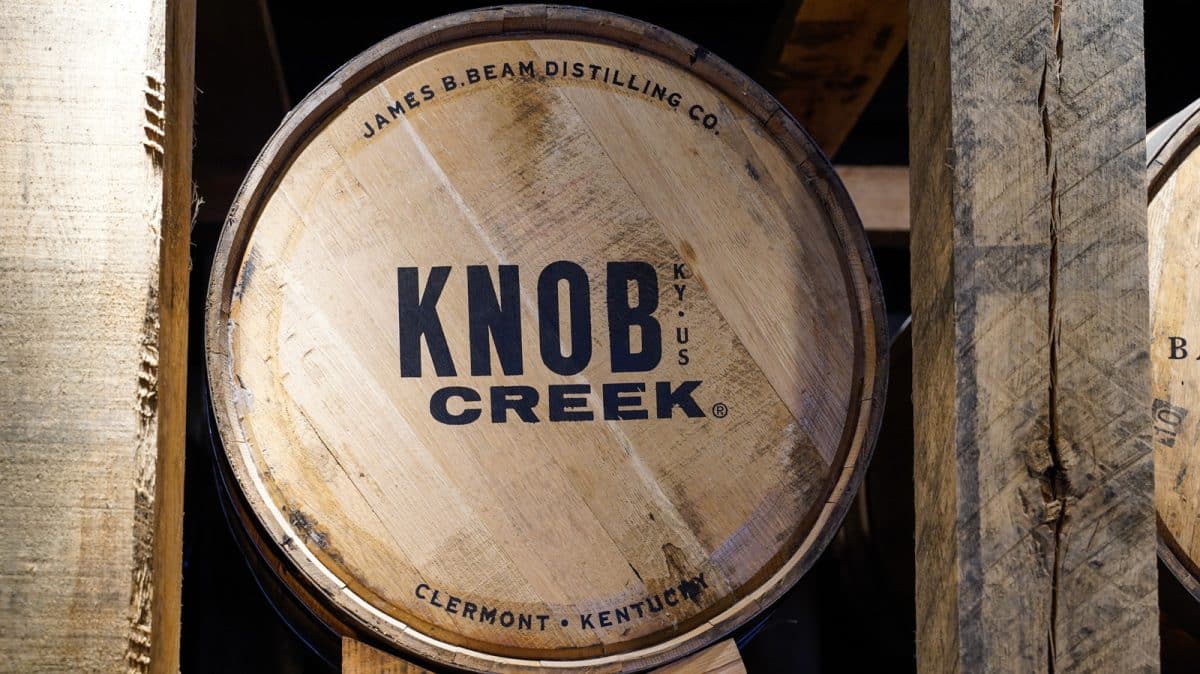
Although the bottle reads like a craft product, Knob Creek is produced by James B. Beam Distilling Co., a company with national scale. That backing gives the whiskey broad distribution and consistent access to inventories most independent labels can’t match.
At the same time, the term small‑batch carries no strict legal definition in U.S. regulations. Producers use it to suggest a curated blend of barrels, but barrel counts and blending approaches vary widely from brand to brand.
Mash bill and oak: traditional choices, recognizable results
Knob Creek sticks with classic bourbon-building blocks rather than experimental grain bills. Reports on earlier releases suggest a recipe heavy on corn with rye and malted barley to add spice and structure, producing the sweet‑spice balance drinkers expect from Kentucky bourbon.
More than grain, the whiskey’s character is shaped by how it meets the barrel. The brand emphasizes the role of deeply charred oak — a style decision that delivers pronounced notes of vanilla, caramel, toasted wood and a dry finish.
Why this matters to buyers today
- Availability: Knob Creek is widely distributed, making it an accessible choice for people seeking a bolder bourbon without hunting limited releases.
- Value proposition: Higher proof and extended aging (when present on the label) give the bottle versatility for sipping neat, in stirred cocktails, or mixed drinks that need backbone.
- Label changes: Shifts in age statements and the occasional cask‑strength offering show how supply pressures and marketing choices can affect what appears on shelves.
- House style: If you favor oak‑forward, spicy bourbons, Knob Creek’s flavor profile is consistent with that preference.
Quick takeaways for shoppers
Knob Creek sits in the middle ground: not a tiny craft release, nor a bland mass‑market bourbon. For consumers it offers a reliable example of the bolder, oak‑driven Kentucky style that helped reframe American whiskey over the last three decades.
Whether you pick it up for cocktails or to sip, expect a whiskey built around higher proof, pronounced barrel influence, and a traditional mash approach — qualities that keep it relevant as bourbon trends continue to shift.
Irish whiskey: approachable bottles new drinkers should try today
Fishtown restaurants ranked: must-visit spots locals are raving about