Show summary Hide summary
Florida International University, near Miami, has added a fully automated cooking system to one of its campus dining spaces — part of a growing effort by colleges to rethink how students eat and work on campus. The move aims to speed service, expand hours and offer contactless options, but it also raises questions about labor, cost and how universities balance innovation with student needs today.
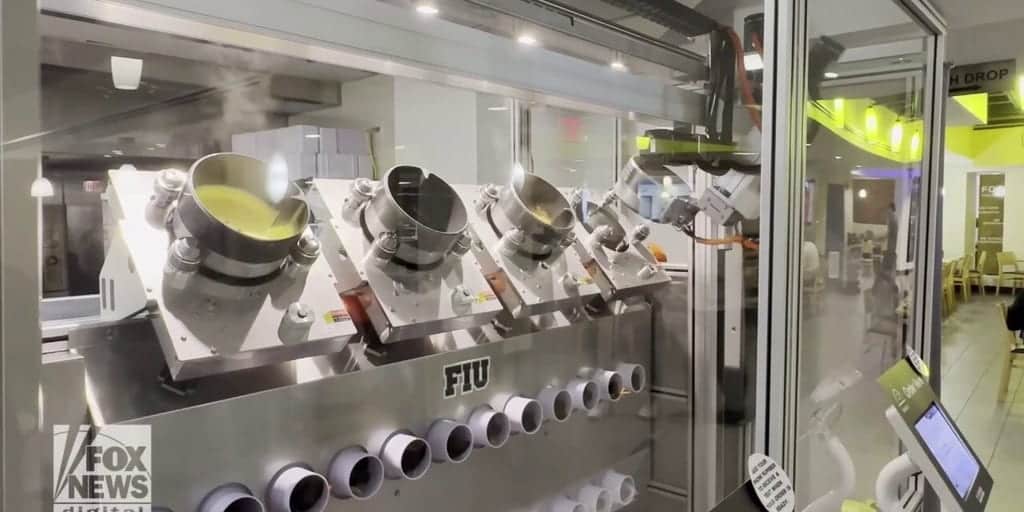
The unit, described by the university as a “robot kitchen,” combines automated appliances, conveyor systems and touchscreen ordering to prepare a range of hot and cold meals without the constant presence of a line cook. Installed in a high-traffic dining area, the system is intended to ease rush-hour bottlenecks and provide more reliable service during evening and late-night hours.
How the system works and what students can expect
Students place orders at kiosks or through a mobile app and retrieve meals from designated pickup stations when notified. Behind the scenes, software coordinates ingredient dispensing, cooking cycles and portion control, while staff oversee maintenance, quality checks and restocking.
Caramel, butterscotch, toffee: how their differences affect your desserts
McDonald’s rebrands Twitter to honor Bubba Wallace after his first NASCAR Cup win
The university emphasizes the unit as a supplement to existing dining halls rather than a replacement for human-run kitchens. Officials say the setup enables predictable meal preparation and can keep service running when staffing is limited — a practical advantage in the face of the tight labor market that has affected college dining nationwide.
- Faster service: Automated sequencing reduces wait times in peak periods.
- Extended hours: The system can operate with fewer staff, making late-night options more feasible.
- Contactless pickup: Mobile ordering and touchless delivery appeal to students who prefer low-contact interactions.
- Menu consistency: Programmed recipes help maintain portion control and reproducible results.
- Operational oversight: Human staff remain responsible for food safety, equipment upkeep and customer service.
Student reaction and campus impact
Responses among students have been mixed. Some welcome shorter lines and the convenience of ordering from a phone, especially during busy class-change windows. Others miss the personal touch of a staffed food counter and worry about the effect on student employment opportunities.
Campus dining directors say the system also serves educational purposes: it can act as a living lab for engineering, hospitality and business students interested in automation, supply-chain logistics or food operations management. Partnerships between dining services and academic departments are already being explored to allow research projects and hands-on coursework involving the equipment.
Trade-offs and operational challenges
Adopting automated kitchens is not just a plug-and-play upgrade. Universities must budget for installation, ongoing maintenance and software updates, and build supply chains that suit preprogrammed production. There are also questions about how such systems affect wages and hours for student workers and hourly staff — issues that have prompted discussion on other campuses deploying automation.
| Robot kitchen | Traditional kitchen | |
|---|---|---|
| Labor model | Fewer hands-on cooks; more technical oversight | Relies on line cooks and student employees |
| Service hours | Easier to extend late-night operations | Limited by staff availability |
| Menu flexibility | Best for repeatable, standardized dishes | Greater variety and on-demand customization |
| Costs | High upfront investment; potential long-term savings | Lower initial cost; ongoing payroll expenses |
For university administrators, the decision to adopt automation is often framed as a balance between service reliability and social responsibility. Proponents point to improved access for students who work late or have unpredictable schedules, while critics highlight the potential erosion of entry-level job opportunities that many students rely on for income and experience.
With rising attention to food insecurity on campuses nationwide and continued pressure on dining budgets, the timing of FIU’s deployment is notable. It reflects a broader trend: institutions experimenting with technology to keep cafeteria doors open, meet demand and contain costs — without losing sight of safety and student welfare.
What matters now is how the university monitors outcomes. Will the automated kitchen measurably reduce wait times, expand meal access and complement student employment programs? Or will it prompt adjustments to staffing models that require new campus policies? Observers will be watching usage patterns, satisfaction surveys and financial results over the coming months to judge whether the experiment improves campus dining in practice.
Irish whiskey: approachable bottles new drinkers should try today
Fishtown restaurants ranked: must-visit spots locals are raving about