
Show summary Hide summary
If you want fall-apart pulled pork for a weekend cookout or a simple weeknight dinner, there are two reliable routes: the hands-on, low-and-slow smoker that builds deep flavor, or a low-attention braise that delivers tender meat with minimal babysitting. Both approaches can produce restaurant-quality results; the choice comes down to how much time and attention you can give the cook.
Why this matters now: backyard gatherings and summer menus push smoked pork into the spotlight, while busy schedules make set-and-forget methods more appealing. Understanding the trade-offs helps you plan flavor, time, and equipment to match the occasion.
Two proven approaches
Think of pulled pork as a spectrum between art and convenience. At one end is the traditional smoker, where you manage fire, smoke and humidity to develop a thick bark and layered smoke flavors. At the other is a controlled braise—oven, slow cooker, or pressure cooker—where you prioritize tenderness and reliability.
Caramel, butterscotch, toffee: how their differences affect your desserts
McDonald’s rebrands Twitter to honor Bubba Wallace after his first NASCAR Cup win
| Method | Typical Time | Temperature | Pros | Cons |
|---|---|---|---|---|
| Smoker (low-and-slow) | 8–14 hours | 225–250°F (107–121°C) | Deep smoke flavor, superior bark | High attention, weather-dependent |
| Oven (reverse-sear/braise) | 5–7 hours | 250–300°F (121–149°C) | Predictable, indoor-friendly | Less pronounced smoke character |
| Slow cooker | 6–10 hours (low) | ~200°F low setting | Set-and-forget, forgiving | No bark, milder crust |
| Pressure cooker / Instant Pot | 1–2 hours | High pressure | Fast, tender results | No bark, less smoky flavor |
Choosing and prepping the pork
Select a bone-in or boneless pork shoulder (also sold as Boston butt) in the 4–8 pound range for even cooking and a good meat-to-fat ratio. Look for visible marbling; fat melts during the cook and keeps the meat moist.
Trim only excess fat—leave a thin layer to baste the meat as it cooks. Apply a simple rub of salt, pepper, a touch of sugar, and your preferred spices about 30–60 minutes before cooking, or overnight for deeper seasoning. If you’re smoking, consider a light yellow mustard coat first to help the rub adhere and foster a better bark.
Temperature targets and why they matter
Pulled pork isn’t done at the typical pork minimum of 145°F. For shreddable pork shoulder, aim for an internal temperature between 195°F and 205°F. At that range collagen converts to gelatin and the meat begins to pull apart easily. Use a reliable instant-read thermometer and check near the bone if present.
Expect a long stall—where internal temperature pauses or rises slowly—during low-temperature smoking. Options during the stall include patience, wrapping the roast in foil (the Texas crutch) to speed through, or increasing heat slightly. Wrapping shortens time but softens the bark.
Finishing and pulling
Once the meat hits target temperature, remove it and let it rest, tented loosely, for 30–60 minutes. This rest lets juices redistribute and makes shredding neater. If you want to firm up the crust after a braise, finish on a hot grill or under a broiler for a few minutes.
Use two forks or clean hands (with gloves) to shred into chunky ribbons. For a pulled texture that still holds moisture, stop shredding when you see fibrous strands—not a mush. Skim any excess fat from the juices and mix a few tablespoons back into the meat for extra flavor.
Sauces, serving ideas, and sides
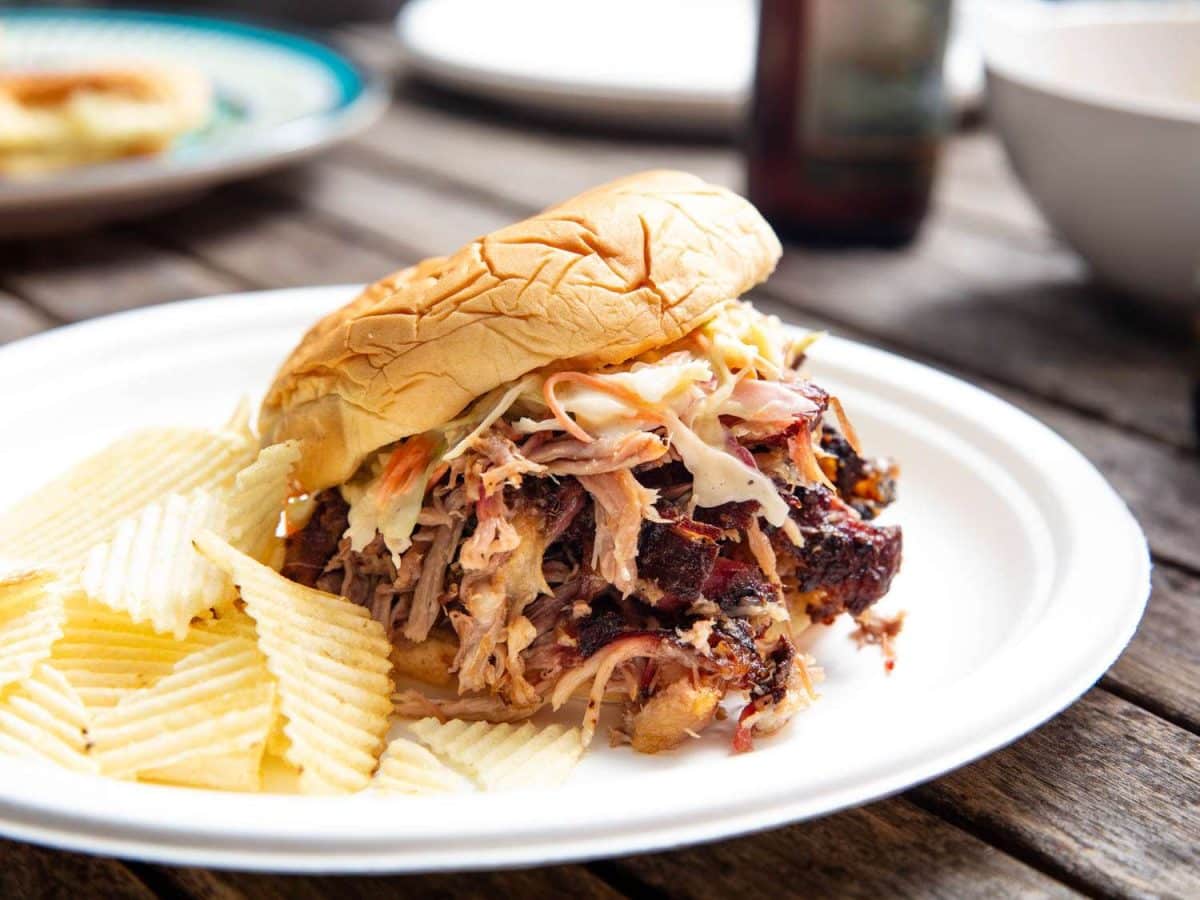
Serve pulled pork with classic sides—coleslaw, pickles, cornbread—or use it as a versatile protein: tacos, nachos, flatbreads, or grain bowls. Sauce is optional; offer a vinegar-based sauce for brightness and a tomato-based or sweet sauce for richer palates. Toss lightly to coat rather than drown the meat.
- Classic sandwich: Toasted bun, pork, slaw, and a drizzle of sauce.
- Tacos: Lime, cilantro, diced onion, and a spicy salsa.
- Baked nachos: Layer pulled pork over chips, add cheese, bake, then finish with crema and scallions.
Food safety and storage
Cool leftovers quickly—within two hours—and refrigerate in shallow containers. Properly stored, pulled pork keeps for 3–4 days in the fridge or up to three months frozen. Reheat gently in a covered pan with a splash of stock to prevent drying; microwave reheats unevenly and can leave meat tough.
If you’re cooking for a crowd, consider doing the main cook a day ahead and finishing on a grill or in a hot oven just before serving. That approach reduces day-of stress and preserves texture.
Quick tips at a glance
- Thermometer first: Cook by temperature, not time.
- Temperature goal: 195–205°F for easy shredding.
- Don’t over-trim: Keep a thin fat cap for moisture.
- Stall strategy: Wrap to speed up, or wait for flavor development.
- Rest before pulling: 30–60 minutes for juicier meat.
Whether you want to stand by the smoker all day for a deep smoke profile or prefer a hands-off braise for a reliable weeknight meal, these principles will get you to tender, flavorful pulled pork. Choose the method that matches your schedule and equipment, and focus on temperature and rest—the simplest levers for consistent success.
Irish whiskey: approachable bottles new drinkers should try today
Fishtown restaurants ranked: must-visit spots locals are raving about










