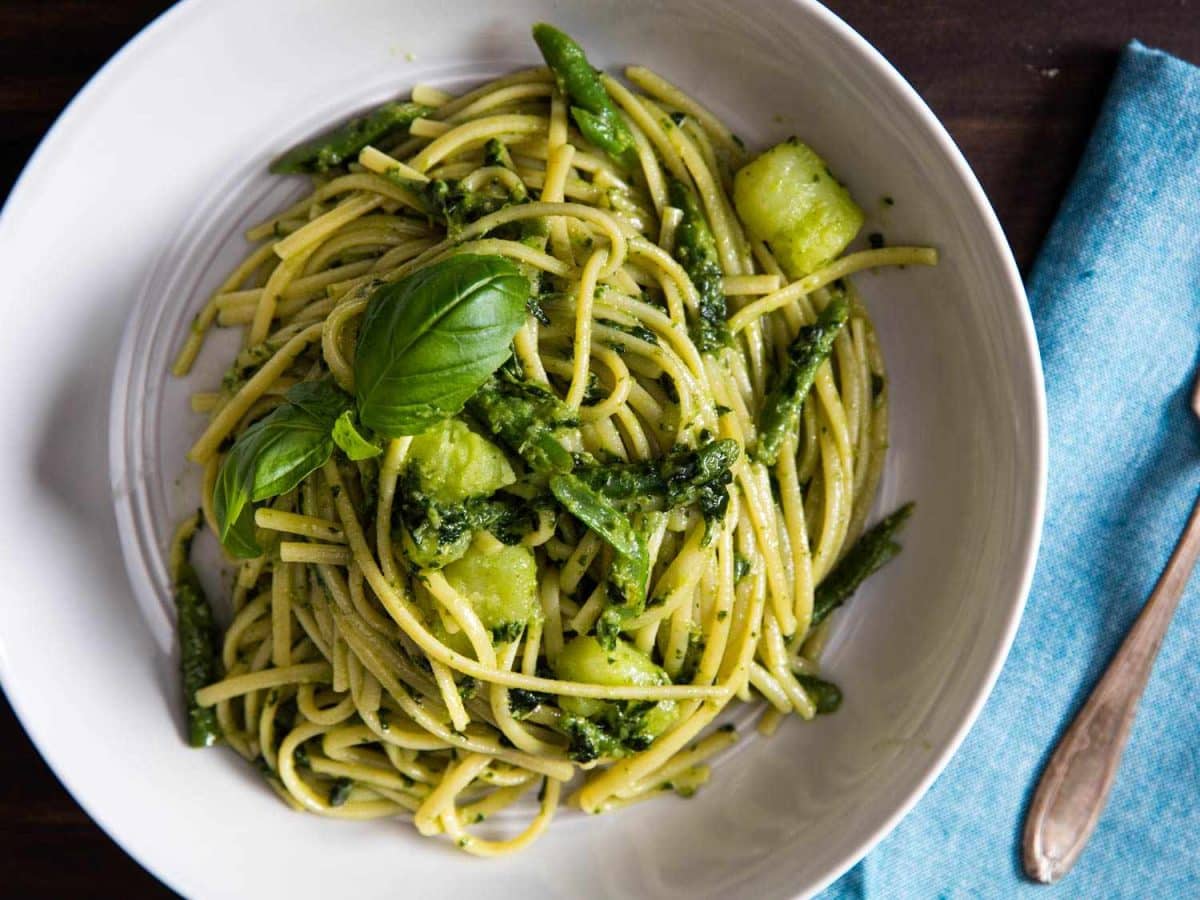
Fresh herb overload is one of the small joys of warmer months — and the fastest route to wilted parsley, basil, and mint. Blending those greens into a bright, shelf-stable pesto makes them useful for days, lifts simple weeknight meals, and reduces kitchen waste without much effort.
Pesto in five minutes
Start with a packed handful of herbs, a handful of nuts, a clove or two of garlic, a splash of lemon, a generous drizzle of good-quality olive oil, and a hard cheese if you want a savory edge. Pulse everything in a food processor or blender until the mixture reaches a loose, spreadable texture; stop early for chunkier pesto and run it longer for a smoother finish. Taste and adjust salt, acid, or oil — pesto should be lively, not flat.
Why this matters now
Home cooks are juggling tighter budgets and busier schedules while still craving fresh flavors. Making pesto turns a small pile of herbs into multiple meals and cuts down on trips to the store. It’s also an efficient way to lock in peak-season taste: freezing or oil-sealing pesto preserves the bright herb character for months.
Caramel, butterscotch, toffee: how their differences affect your desserts
McDonald’s rebrands Twitter to honor Bubba Wallace after his first NASCAR Cup win
Storage, scaling and safe handling
Small batches last 4–5 days in the fridge when stored in an airtight container with a thin film of oil on top to slow oxidation. For longer storage, freeze pesto in ice cube trays, then transfer the cubes to a sealed bag — single portions ready to drop into soups, sauces, or dressings. When reheating, stir pesto into warm food rather than cooking it aggressively; high heat dulls the fresh herb notes.
A few practical swaps
You don’t need basil to make a great pesto. Swap in parsley, cilantro, arugula, dill, or even spinach as a base. Nuts are flexible too: pine nuts are classic, but walnuts, almonds, sunflower seeds, or pistachios work well and change the texture and aroma. If you omit cheese for a vegan version, add a spoonful of nutritional yeast or extra nuts to maintain mouthfeel.
Quick troubleshooting
If a batch tastes bland: add lemon or a pinch of salt. Too bitter? A small spoonful of honey can balance green sharpness. If it’s too oily, blend in more herbs or a spoon of water to loosen the texture without diluting flavor.
How to use pesto (fast wins)
– Stir into warm pasta and finish with a squeeze of lemon for a weeknight main.
– Swirl into minestrone or vegetable soup just before serving to add herbal freshness.
– Toss with roasted vegetables or grilled potatoes as a finishing sauce.
– Spread on sandwiches, toast, or flatbreads in place of mayo or butter.
– Spoon over grilled fish, chicken, or roasted mushrooms for instant glazing.
Pesto variations at a glance
| Style | Core herbs/nuts | Best uses |
|---|---|---|
| Classic Genovese | Basil, pine nuts, parmesan | Pasta, bruschetta, gnocchi |
| Parsley–Walnut | Parsley, walnuts, lemon | Roasted fish, grain bowls, vinaigrettes |
| Cilantro–Lime | Cilantro, almonds, lime | Tacos, grilled meats, rice |
| Arugula–Pistachio | Arugula, pistachios, pecorino | Salads, pizza finishing, roasted veg |
| Vegan Herb | Mixed herbs, sunflower seeds, nutritional yeast | Sandwich spread, pasta, dips |
Finishing touches that make a difference
A little acid brightens pesto more than extra salt. Try lemon juice or a splash of vinegar right at the end. For a silkier texture, warm the oil slightly before blending. If you want a restaurant-quality sheen, fold a spoonful of hot pasta water into the pesto when dressing noodles — the starch helps the sauce cling.
A final, practical note
Pesto is as much about timing as ingredients: make it when herbs are at their peak to capture the freshest flavor, then portion and freeze. That small upfront effort buys you a week’s worth of effortless dinners, better-tasting leftovers, and fewer wasted herbs in the bin.
Irish whiskey: approachable bottles new drinkers should try today
Fishtown restaurants ranked: must-visit spots locals are raving about