
Show summary Hide summary
Spring’s short window for fresh asparagus is open, and with farmers markets resuming and backyard grills heating up, cooks are shifting menus to match. What matters now is making the most of this fleeting season—better flavor, lower cost, and the chance to buy directly from growers.
Why asparagus season changes what you cook
When asparagus is picked at peak ripeness it tastes markedly different from supermarket stalks: greener, sweeter, and more tender. That difference influences everything from quick weeknight meals to weekend gatherings, because the vegetable needs minimal adornment to shine.
Caramel, butterscotch, toffee: how their differences affect your desserts
McDonald’s rebrands Twitter to honor Bubba Wallace after his first NASCAR Cup win
There’s also a practical angle. Buying in season reduces food miles and often supports nearby farms, which matters for local economies and for anyone trying to eat more sustainably.
How to choose and store fresh asparagus
Look for straight, firm stalks with tightly closed tips and vibrant color. Thinner spears cook quickly and are ideal for simple sautés, while thicker ones stand up to grilling and roasting.
- Buying tip: Stand the bunches upright in a cooler to see if tips are moist rather than floppy—sign of freshness.
- Storage: Trim the ends and stand asparagus upright in a jar with an inch of water; cover loosely with a plastic bag and refrigerate for up to five days.
- Prep: Bend a spear near the base to find where the woody part breaks off, or trim the bottom inch or two if you prefer efficiency.
Simple techniques that highlight asparagus
Because asparagus has a crisp, green flavor, methods that preserve texture and introduce light char or caramelization work best. Here are reliable approaches that suit different cooking situations.
- Quick sauté: Heat oil, add garlic or shallots, and toss spears for 4–6 minutes until bright and tender-crisp.
- Grilling: Coat with oil, salt, and pepper; grill over medium-high heat for 2–3 minutes per side for medium-thick spears.
- Roasting: Roast at 425°F (220°C) for 10–15 minutes with lemon zest and anchovy or Parmesan for savory depth.
- Blanch and shock: For salads or chilled dishes, blanch 1–2 minutes then plunge into ice water to lock color and texture.
All of these techniques benefit from a final acid—fresh lemon juice, a drizzle of vinegar, or a bright herb sauce—because acidity lifts the vegetal notes and rounds the dish.
Winning pairings and recipes to try this week
Seasonal asparagus pairs well with soft cheeses, cured meats, citrus, and herbs. Simple combinations are often the most memorable: grilled asparagus with shaved Pecorino and lemon; roasted spears tossed with toasted almonds and parsley; or asparagus bundled and wrapped with prosciutto as an appetizer.
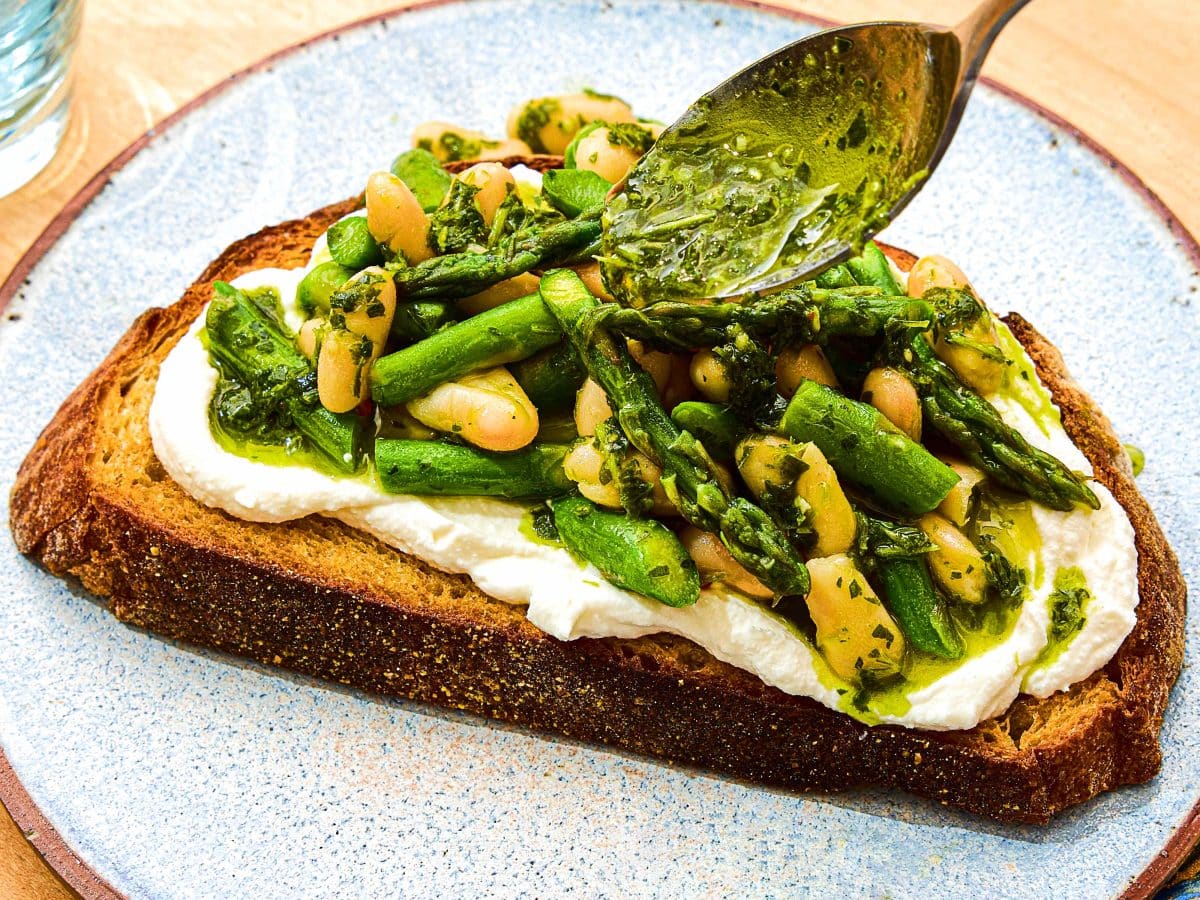
Editors have been testing a few crowd-pleasers: a rustic toast topped with sautéed asparagus and creamy beans, a chimichurri-accented platter for sharing, and a sheet-pan dinner where asparagus finishes alongside new potatoes and salmon. These recipes are shortcuts to vibrant spring meals without a long ingredient list.
What to ask at the market
Talking to growers can change your shopping habits. Ask about harvest time (same-day harvest is best), whether they grow different varieties, and how they recommend cooking their produce. Small farms often have tips for storage and pairings that you won’t find on a label.
- Ask about pesticide practices if that matters to you
- See if the farm offers mixed boxes—often the best way to discover other seasonal gems
- Buy a little extra for quick pickles or to roast and freeze for soups later in the season
Spring’s asparagus run is brief. Treat it as an opportunity to simplify meals, support nearby farmers, and refresh your weekly rotation with bright, seasonal flavors.
Irish whiskey: approachable bottles new drinkers should try today
Fishtown restaurants ranked: must-visit spots locals are raving about










