
Show summary Hide summary
Make Kenyan chapati at home with ordinary pantry ingredients and a simple folding technique, and you can have soft, layered flatbreads on the table in roughly an hour. The method is forgiving, the flavors are versatile, and the result is a useful weeknight companion for stews, vegetables, or as a wrap.
What sets Kenyan chapati apart
The Kenyan version shares a name with Indian chapati but occupies its own place on the flatbread map. Rather than the plain unleavened rounds often called chapati in South Asia, Kenyan chapati is rolled and laminated to create delicate layers—closer in spirit to a thin paratha but with less fat, which keeps the bread soft rather than crisp.
Caramel, butterscotch, toffee: how their differences affect your desserts
McDonald’s rebrands Twitter to honor Bubba Wallace after his first NASCAR Cup win
The texture you’re aiming for
Good Kenyan chapati should be thin yet tender, with multiple separated sheets that steam apart as they cook. That separation is produced by spreading a light coat of fat between rolled layers and by giving the dough enough moisture to expand while remaining pliable.
Why this matters now
With more people cooking at home and exploring global dishes, chapati is an appealing option: it uses common flours and milk or water, requires no yeast, and scales easily for family meals or a solo dinner. Learning the technique opens a new way to stretch leftovers or build fast, hand-held meals.
Quick reference
| Serves | 8 flatbreads |
|---|---|
| Prep | 20 minutes |
| Cook | 20 minutes |
| Rest | 50 minutes (short rests at two stages) |
| Total | Approximately 90 minutes (most hands-off) |
Ingredients (pantry-friendly)
| Ingredient | Amount |
|---|---|
| All-purpose flour | 350 g (about 2 3/4 cups) |
| Whole-wheat flour | 100 g (? 1/2 cup + 2 tbsp) |
| Kosher salt | 4 tsp (12 g) — halve if using fine salt |
| Warm water | 180 ml (3/4 cup), plus more if needed |
| Warm whole milk | 120 ml (1/2 cup) |
| Neutral oil (or olive, melted butter, lard) | 2 tbsp, plus extra for brushing |
Essential tips before you start
- Flour mix: A blend of all-purpose and whole-wheat reproduces the finely milled whole-wheat commonly used in Kenya—enough gluten control for elasticity but with a wheat-forward flavor.
- Milk in the dough: Replacing some water with milk softens the crumb; proteins and milk fats moderate gluten development and improve tenderness.
- Hydration: The dough should feel slightly tacky, not dry. If it seems shaggy, add water a tablespoon at a time.
- Use a hot, flat pan: A 10–12 inch seasoned cast-iron or stainless skillet gives even heat and the fastest, most predictable browning.
- Minimal oil when cooking: A light film prevents sticking; too much oil will fry the edges and make the bread crisp rather than supple.
Step-by-step (condensed)
These steps summarize the process; allow the short rests noted above for best layers.
- Mix the flours and salt in a large bowl. Stir in warm water and milk to form a rough, sticky dough, then add 2 tablespoons of oil and knead until smooth and elastic (3–5 minutes).
- Press the dough into a rectangle, brush with oil, cover, and rest 20 minutes.
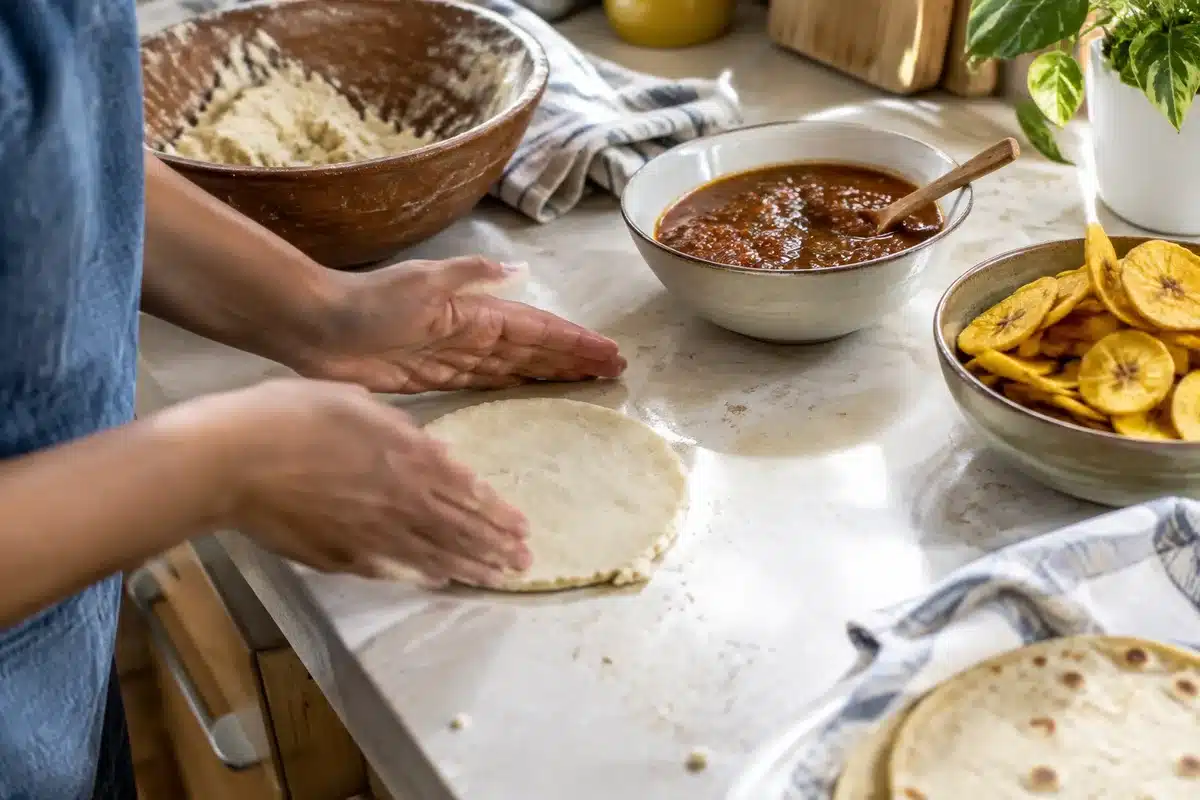
- Roll the dough into a thin rectangle (roughly 12 × 18 inches). Brush lightly with oil, dust with flour, then roll from the long edge into a log. Slice into eight pieces, flatten each, and let them rest under a cloth for about 30 minutes.
- Roll each piece into a 9–10 inch disk. Heat a skillet until very hot, brush with a thin film of oil, and cook each chapati until bubbles form and the underside browns—about 1 minute—then flip and cook another 30–60 seconds. The bubbling shows the layers separating.
- Stack finished chapatis and keep covered until serving so they stay soft.
Special equipment and timing
You don’t need exotic tools—just a rolling pin and a 10–12 inch skillet. The two resting periods (20 minutes after kneading, 30 minutes after shaping) are short but important for relaxed, workable dough and good layering.
Serving, storage, and variations
Chapati pairs well with stews, sautéed greens, grilled proteins, or as a wrapper for spiced fillings. Store cooled chapatis in an airtight container for up to 48 hours at room temperature. To refresh, warm them briefly in a dry pan over medium-low heat until pliable.
Final notes
Small adjustments change the final loaf: more whole-wheat deepens flavor but reduces elasticity; replacing milk with water will still work but yields a firmer texture. Invite a friend to help—chapati-making is traditionally communal and gets easier with practice.
Irish whiskey: approachable bottles new drinkers should try today
Fishtown restaurants ranked: must-visit spots locals are raving about