
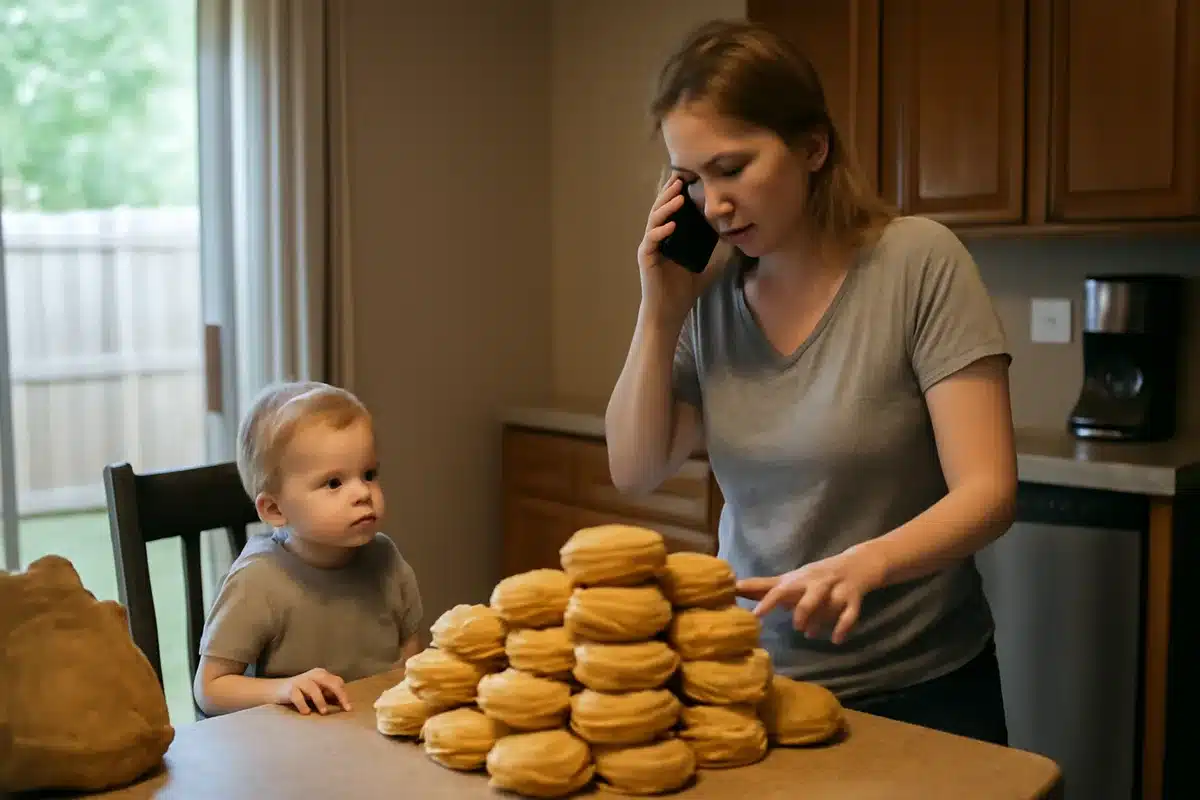
A Texas mother says a brief moment of inattention led to an unexpected delivery: her toddler allegedly used a food-delivery app to place an order for dozens of burgers. The episode, which unfolded in Kingsville, highlights how easily in-app purchases can happen and why parents should double-check how ordering apps are protected on family phones.
Kelsey Burkhalter Golden told a local CBS affiliate that she believed her two-year-old was simply playing with her phone before she discovered a DoorDash receipt showing an order for 31 McDonald’s cheeseburgers. At the listed local price of about $1.89 per sandwich, the purchase totaled roughly $58.59 before taxes, she said.
Rather than keep the food, Golden posted on Facebook offering the burgers to anyone who wanted them and shared a photo showing her child beside a large stack of wrapped cheeseburgers. She told reporters she plans to take steps to prevent a repeat, saying she may hide the app or otherwise restrict access because DoorDash “is not protected.”
Caramel, butterscotch, toffee: how their differences affect your desserts
McDonald’s rebrands Twitter to honor Bubba Wallace after his first NASCAR Cup win
Why this matters now
With food-delivery apps common on many households’ phones, accidental orders can quickly become a consumer headache: unexpected charges, waste, and the hassle of coordinating refunds or returns. For parents, the incident underscores a practical risk that can be mitigated without giving up the convenience of delivery services.
- Require authentication: Enable app-level PINs or biometric locks so purchases need a fingerprint or face scan.
- Limit one-tap ordering: Turn off features that let apps reorder or complete purchases with a single tap.
- Remove saved payment methods: Keep cards or mobile wallets off the device or require re-entering payment details for each order.
- Use parental controls: Set screen-time limits, create child profiles, or restrict app access through the phone’s settings.
- Monitor order notifications: Enable alerts for new purchases so you can spot and cancel unintended orders quickly.
Delivery platforms and fast-food chains typically offer customer support for mistaken orders, but experiences vary and resolving a charge can take time. The cheapest safeguard is often prevention: small changes to phone and app settings can prevent an accidental digital shopping spree.
Golden’s experience is a reminder for households with young children: apps that save payment details and let purchases go through with minimal friction are convenient—but they can also be exploited by tiny, curious hands. A few protective steps today can avoid an awkward (and costly) surprise tomorrow.
Irish whiskey: approachable bottles new drinkers should try today
Fishtown restaurants ranked: must-visit spots locals are raving about










