Show summary Hide summary
Across the country, fast-food chains are quietly rolling out conversational machines that take orders — and the shift is already reshaping who gets work in restaurants and how quickly customers are served. This is not a future scenario: over the past year more drive-thru lanes and phone lines have been handed to automated systems, raising immediate questions about jobs, service quality and industry costs.
Which chains and technologies are involved?
Several national brands have begun using automated voice systems and robotic equipment in restaurants. The move ranges from phone-order bots to in-store kiosks and experimental kitchen robots.
Caramel, butterscotch, toffee: how their differences affect your desserts
McDonald’s rebrands Twitter to honor Bubba Wallace after his first NASCAR Cup win
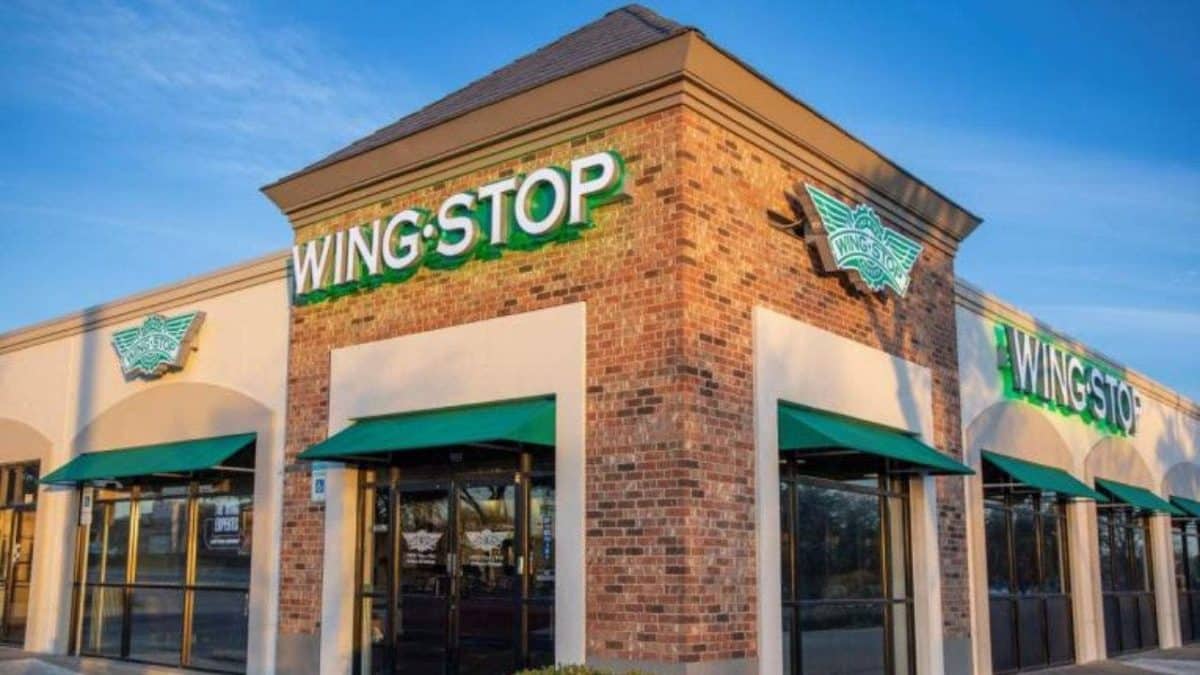
- Wingstop has deployed conversational software for phone orders, using technology provided by the startup ConverseNow.
- Major players including McDonald’s, Taco Bell, Popeyes and Domino’s are testing or operating automated order interfaces at drive-thrus, kiosks or over the phone.
- Chipotle is piloting a tortilla-making robot called Chippy, built by Miso Robotics, as part of broader kitchen automation experiments.
- Some chains are also integrating AI-driven features into mobile apps and dedicated pickup lanes to speed throughput.
Why restaurants are accelerating automation
Operators point to several immediate benefits: a shortage of hourly workers since the pandemic, pressure to cut labor costs, and a desire for faster, more consistent service. Automated systems can run nonstop, don’t require breaks, and scale up without recruiting or training new staff.
For companies, the calculus is straightforward — reduce payroll variability and improve order accuracy. For customers, the promise is shorter waits and fewer incorrect orders, although real-world results depend on the quality of speech recognition and system integration.
What this means for American workers
The most direct effect will be on roles that involve routine customer interaction: drive-thru attendants, phone order clerks and front-counter cashiers. As chains expand automation, those positions face displacement.
At the same time, new jobs will emerge to support and maintain these systems — technicians, data specialists and on-site operators — but those roles often require different skills than traditional fast-food work, raising a retraining challenge.
- Immediate impact: Potential reduction in entry-level customer service roles.
- Medium-term shift: Growth in technical maintenance, software oversight and logistics roles.
- Long-term uncertainty: Scale of net job loss versus creation depends on industry choices and public policy on workforce development.
Customer experience and operational risks
Automated order systems can deliver consistency, but they also introduce new points of failure. Speech-recognition errors, accents and noisy drive-thru environments can frustrate customers. Early deployments have shown both efficiency gains and occasional misunderstandings that require human intervention.
Privacy and data handling are additional concerns: these systems record and process voice data to improve accuracy, which creates questions about retention and consent that companies and regulators will need to address.
How to think about the trade-offs
The shift toward automation in fast food is less a single event than a continuing process. For customers, the day-to-day change may be subtle — quicker pickup lanes, more polished kiosks, fewer staff at counters. For workers and communities, the stakes are higher: lost hours, altered career paths and a growing demand for technical training.
Policymakers, employers and labor advocates will play a key role in smoothing that transition. Options include targeted training programs, wage supports for displaced workers and standards around data protection and workplace monitoring.
Key takeaways:
- AI and automation are already in use at multiple fast-food chains, mainly in drive-thrus and phone ordering.
- Restaurants adopt these systems to cut labor costs, increase hours of operation and improve consistency.
- The most vulnerable jobs are routine customer-facing roles, while technical and oversight positions may grow.
- Customer experience will improve or suffer depending on system accuracy, noise conditions and how companies handle exceptions.
Ultimately, the expansion of automated order-takers is a present-day economic and social question, not a far-off prediction. How companies deploy the technology — and how workers and regulators respond — will determine whether the change improves service while supporting affected employees, or simply shifts costs and risks onto the workforce.
Irish whiskey: approachable bottles new drinkers should try today
Fishtown restaurants ranked: must-visit spots locals are raving about