Show summary Hide summary
- 1. Vesper Martini — James Bond
- 2. Mississippi Punch — Breakfast at Tiffany’s
- 3. Cosmopolitan — Sex and the City
- 4. White Russian — The Big Lebowski
- 5. Old Fashioned — Mad Men
- 6. Orange Whip — The Blues Brothers
- 7. French 75 — Casablanca
- 8. Gibson Martini — The Queen’s Gambit
- 9. Manhattan — Some Like It Hot
- 10. 7&7 — Saturday Night Fever
- 11. Champagne Cup — The Grand Budapest Hotel
- 12. Mai Tai — Blue Hawaii
- 13. Singapore Sling — Fear and Loathing in Las Vegas
- 14. Appletini — Scrubs
- 15. Long Island Iced Tea — Cruel Intentions
Actors don’t just deliver lines — the drinks they hold often tell a story of their own. On-screen cocktails continue to shape bars’ menus and at-home drinking habits, making these well-known libations as culturally influential today as they were in the scenes that made them famous.
These 15 drinks span decades and genres, from wartime classics to neon nightclub sips, and each has left a measurable mark on hospitality, fashion, or home-mixing trends. Below is a quick reference, followed by short profiles that explain what makes each cocktail memorable and how it’s typically made.
Caramel, butterscotch, toffee: how their differences affect your desserts
McDonald’s rebrands Twitter to honor Bubba Wallace after his first NASCAR Cup win
| Cocktail | Film / TV Moment | Signature component |
|---|---|---|
| Vesper Martini | Bond at the poker table | Gin + vodka + fortified wine |
| Mississippi Punch | Holly Golightly’s apartment party | Blend of cognac, bourbon, rum |
| Cosmopolitan | Sex and the City nights out | Vodka, Cointreau, cranberry |
| White Russian | The Dude’s signature drink | Kahlúa + cream with vodka |
| Old Fashioned | Don Draper’s go-to | Whiskey, sugar, bitters |
| Orange Whip | The Blues Brothers gag | Orange, cream, rum/vodka |
| French 75 | Casablanca’s elegant bar | Gin, lemon, champagne |
| Gibson Martini | The Queen’s Gambit style cue | Martini garnished with pickled onion |
| Manhattan | Train-car mixing in Some Like It Hot | Rye, sweet vermouth, bitters |
| 7&7 | Saturday Night Fever’s disco energy | Seagram’s 7 whiskey + 7-Up |
| Champagne Cup | The Grand Budapest Hotel’s frivolity | Brandy + liqueur topped with champagne |
| Mai Tai | Blue Hawaii’s island vibes | Jamaican rum + orgeat |
| Singapore Sling | Fear and Loathing’s patio scenes | Cherry Heering + gin + pineapple |
| Appletini | J.D.’s running gag in Scrubs | Apple schnapps + vodka |
| Long Island Iced Tea | Cruel Intentions’ deceptive sip | Multiple spirits topped with cola |
1. Vesper Martini — James Bond
Few drinks are as tightly associated with a single character as the Vesper is with James Bond. Introduced in Ian Fleming’s early novels and later dramatized on screen, this cocktail blends different spirits for a crisp, polished result — the kind of glass that signals control and luxury.
The mixture typically pairs gin and vodka, finished with a fortified white wine for floral, citrus notes. Historically, the recipe referenced a specific aromatized wine no longer widely produced; modern bartenders often substitute a similar blanc aperitif. Served with a thin lemon peel, it reads as a deliberate, elegant choice when Bond orders it at a table.
2. Mississippi Punch — Breakfast at Tiffany’s
Holly Golightly’s social life comes through loud and clear in the punch she serves, which reflects the era’s appetite for convivial, shareable drinks. This is not a light refresher: its strength comes from a deliberate blend of aged spirits.
The punch mixes cognac, bourbon and dark rum with lemon and sugar; fruit garnishes add showy color. The result is boozy yet smooth, a party staple that reads like a snapshot of 1960s glamour.
3. Cosmopolitan — Sex and the City
The Cosmopolitan didn’t invent pink cocktails, but the TV series turned it into a social symbol of friendship and modern nightlife. Its bright color and approachable flavor profile helped cement its place on brunch and cocktail menus alike.
Classic builds combine vodka, orange liqueur, cranberry and lime, shaken and strained into a stemmed glass. It’s light on bitterness and heavy on social appeal — easy to sip in a group and easy to photograph, which amplified its popularity on social platforms.
4. White Russian — The Big Lebowski
The White Russian is practically shorthand for easygoing indulgence thanks to “The Dude.” Cold, creamy and unpretentious, it fits a character who prefers comfort over formality.
Made from vodka, coffee liqueur and cream, its texture is the main attraction. The film’s repeated shots of the drink helped resurrect interest in a midcentury recipe that had faded from cocktail lists.
5. Old Fashioned — Mad Men
Another case of a beverage embodying a persona: the Old Fashioned became an extension of a particular kind of midcentury masculinity when featured on the show. The cocktail’s renaissance in recent years owes much to that association.
At its core: whiskey, sugar and bitters. Methods range from the minimalist — stirring whiskey with bitters over ice — to sweeter, soda-finished variations. Either way, it’s a study in restraint rather than ornamentation.
6. Orange Whip — The Blues Brothers
Sometimes a line in a movie turns a simple prop into pop culture lore. The call for “Three Orange Whips” in The Blues Brothers is one of those moments.
The on-screen reference originally pointed to a nonalcoholic orange soda, but bartenders and fans later adapted it into a creamy, tropical cocktail: rum and vodka with orange juice, triple sec and a touch of cream. It’s dessert-like and nostalgic, a creamsicle in adult form.
7. French 75 — Casablanca
Short and sparkling, the French 75 captures an old-Hollywood elegance. Its appearance in a wartime romance underlines the drink’s association with refinement and a slightly dangerous effervescence — hence the rumored artillery-inspired name.
It pairs gin and lemon with a splash of simple syrup, then finishes with sparkling wine. Light, citrus-forward and celebratory, it’s a good reminder that bubbles can change a cocktail’s entire character.
8. Gibson Martini — The Queen’s Gambit
A small garnish can shift a drink’s personality, and that’s the lesson of the Gibson. In the series, the cocktail becomes a subtle marker of taste and worldliness.
Like a martini but crowned with pickled onions, the Gibson leans savory and aromatic. It’s spare, precise and well-suited to scenes that prize understatement over flash.
9. Manhattan — Some Like It Hot
In a film sequence improvised from limited supplies, the Manhattan stands in for classic cocktail craft. The scene underscores two things: how resourcefulness can make a memorable moment, and how a simple stirred drink can feel sophisticated.
Rye whiskey paired with sweet vermouth and bitters, served up with a twist or cherry, gives a warm, herbaceous profile that has kept the Manhattan on bar menus for well over a century.
10. 7&7 — Saturday Night Fever
Disco-era minimalism in a glass: the 7&7 is two familiar components and instant nostalgia. Featured repeatedly in the film, it became shorthand for the club scene’s easy pleasures.
Combine a cola-like whiskey with lemon-lime soda and a wedge, and you have an uncomplicated, rhythm-friendly drink. Its simplicity is its strength: easy to order, easy to drink, and easy to adapt.
11. Champagne Cup — The Grand Budapest Hotel
In a movie obsessed with texture and color, the Champagne Cup fits right in — effervescent, whimsical and slightly theatrical. The historical idea of a champagne cup is flexible, which invites experimentation.
Contemporary recreations tend to mix brandy or cognac with an orange liqueur and a sweet element, then top with champagne and garnish with cherries. The final product reads as playful luxury.
12. Mai Tai — Blue Hawaii
Though not born in Hawaii, the Mai Tai’s appearance in a beach-set Elvis film sent it straight into the island canon. It’s the archetype of tiki-era tropicality.
Traditional versions balance Jamaican rum, lime, curaçao and orgeat — an almond syrup — over crushed ice. Bright, nutty and citrusy, the Mai Tai became a cultural export as much as a local favorite.
13. Singapore Sling — Fear and Loathing in Las Vegas
In contrast to the film’s chaos, the Singapore Sling reads as unabashedly cheerful — a pink, fruity emblem of resorts and sunlit patios. The writers’ fondness for the drink helped cement its narrative placement.
The original recipe is complex, featuring gin, cherry liqueur, herbal notes and pineapple, finished with soda. It’s theatrical and colorful, ideal for moments that demand spectacle.
14. Appletini — Scrubs
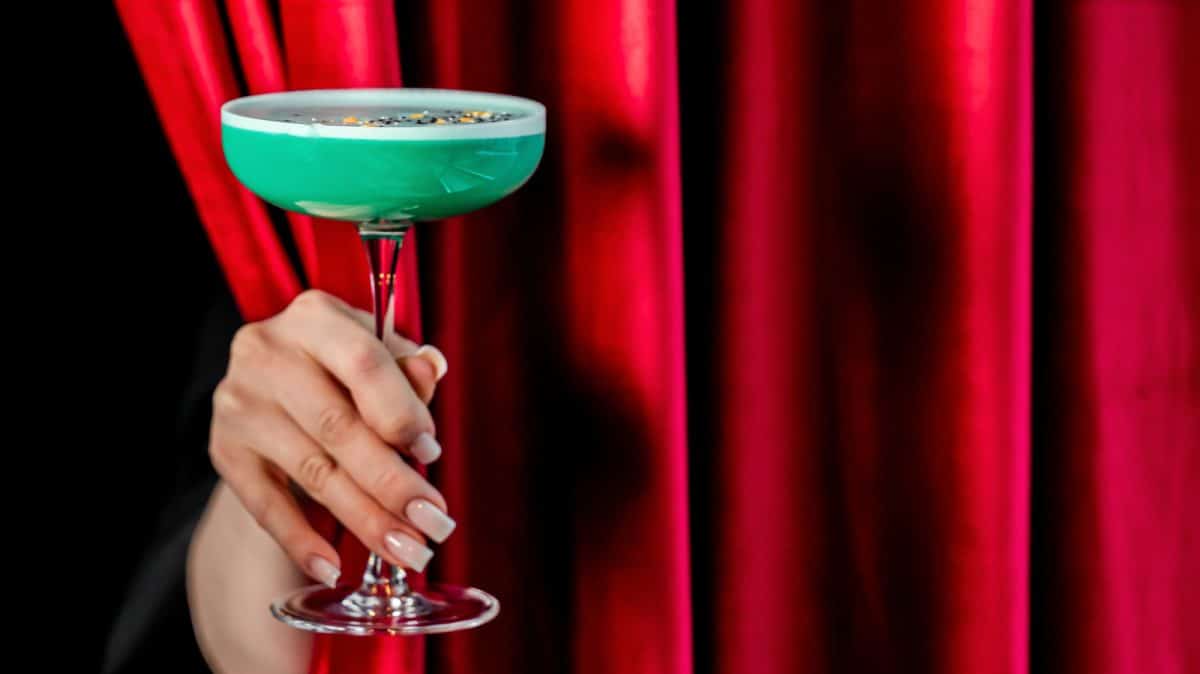
Not all screen-famous drinks aim for sophistication. The appletini’s neon-green grin matches the sitcom’s playful tone and the character who made it his comfort cue.
Often built from apple schnapps and vodka, it can be tweaked with lemon or simple syrup to balance tartness. It’s candy-like and character-driven — more personality than pedigree.
15. Long Island Iced Tea — Cruel Intentions
The Long Island is famous for looking harmless while packing a serious alcoholic wallop — a perfect fit for scenes built around deception. The cocktail’s cinematic cameo drives home that contrast.
Multiple clear spirits are brought together with citrus and sweetener, then topped with cola to mimic iced tea. It’s a potent, crowd-pleasing example of how presentation can disguise strength.
Why these pairings matter now: screen-driven interest still moves consumer behavior — from bars adding “As Seen On” menu items to home bartenders searching recipes online. Whether you’re curious to taste a piece of film history or simply hunting a new favorite, these cocktails are living examples of how culture and hospitality keep influencing each other.
- Tip for readers: When recreating any of these at home, focus on balance — a small tweak (less sugar, fresher citrus) often transforms a nostalgic recipe into something modern and more enjoyable.
- Bar trend to watch: Classic recipes with subtle updates — think low-ABV twists, premium mixers, or house-made bitters — continue to be popular with menus responding to both nostalgia and contemporary taste.
Irish whiskey: approachable bottles new drinkers should try today
Fishtown restaurants ranked: must-visit spots locals are raving about