Show summary Hide summary
Swapping shallots and onions is a common kitchen question with practical consequences: the choice changes a dish’s sharpness, sweetness and cooking time. Knowing when and how to substitute will help you preserve the intended flavor—whether you’re whisking a dressing or building the flavor base for a stew.
Why the swap matters
At a glance, shallots and onions look similar, but they play different roles. Shallots offer a milder, slightly sweet and onion-garlic hybrid note that shines in raw applications. Onions deliver a wider range of intensity—pungent when raw, rounded and sweet when cooked long enough. That difference influences final flavor more than most home cooks expect.
Latin food brands reshaping home kitchens: 4 companies bringing bold flavors and heritage
Frozen vegetables taste sweeter and cut prep time: the swap home cooks swear by

When they’re interchangeable
If a recipe calls for a small amount of aromatic to build background flavor—think sautés, pan sauces, or long-simmered soups—you can generally swap one for the other with minimal disruption. For quick-cook or raw uses (vinaigrettes, salsas, cold salads), choose the one whose profile better suits the finish: shallot for subtlety, onion for brightness.
- Vinaigrettes and dressings: Prefer shallots for a softer bite that doesn’t overpower acid and oil.
- Sauces and pan reductions: Either works; onions will need more time to lose harshness.
- Slow-cooked dishes: Use whichever you have—long cooking smooths out differences.
- Raw toppings (tacos, burgers): Shallots or sweet onions are best; sharp yellow onions can be too aggressive.
Practical substitution guidelines
Rather than strict rules, use these starting points and adjust by taste:
- If replacing a shallot with an onion, start with about half to two-thirds the volume of onion called for; raw onion is usually stronger, so less is safer.
- If substituting an onion with a shallot, use a little more than the recipe’s onion volume to match presence—shallots are milder so you may need to increase the amount slightly.
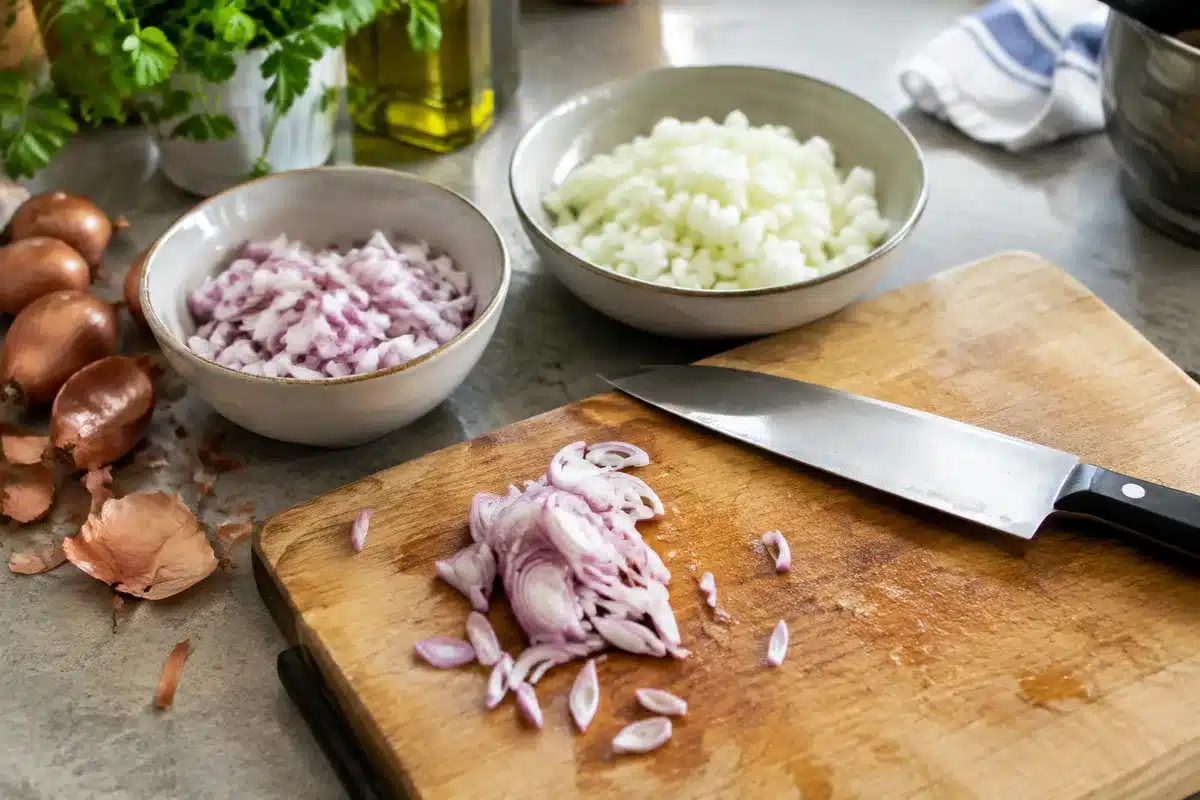
- When chopping: shallots break down faster. If using onions in their place, give them an extra minute or two in the pan to soften and lose sharpness.
Simple measurement reference
Home cooks often find it easiest to think in small, kitchen-friendly conversions: one small shallot will replace a few tablespoons of diced onion in most recipes. When precise balance matters—dressings or delicate sauces—measure by teaspoons or tablespoons and taste as you go.
Cooking tips to preserve flavor
Timing is everything. Add onions earlier when you want sweetness and depth; add shallots later when you want a fresher, subtler note.
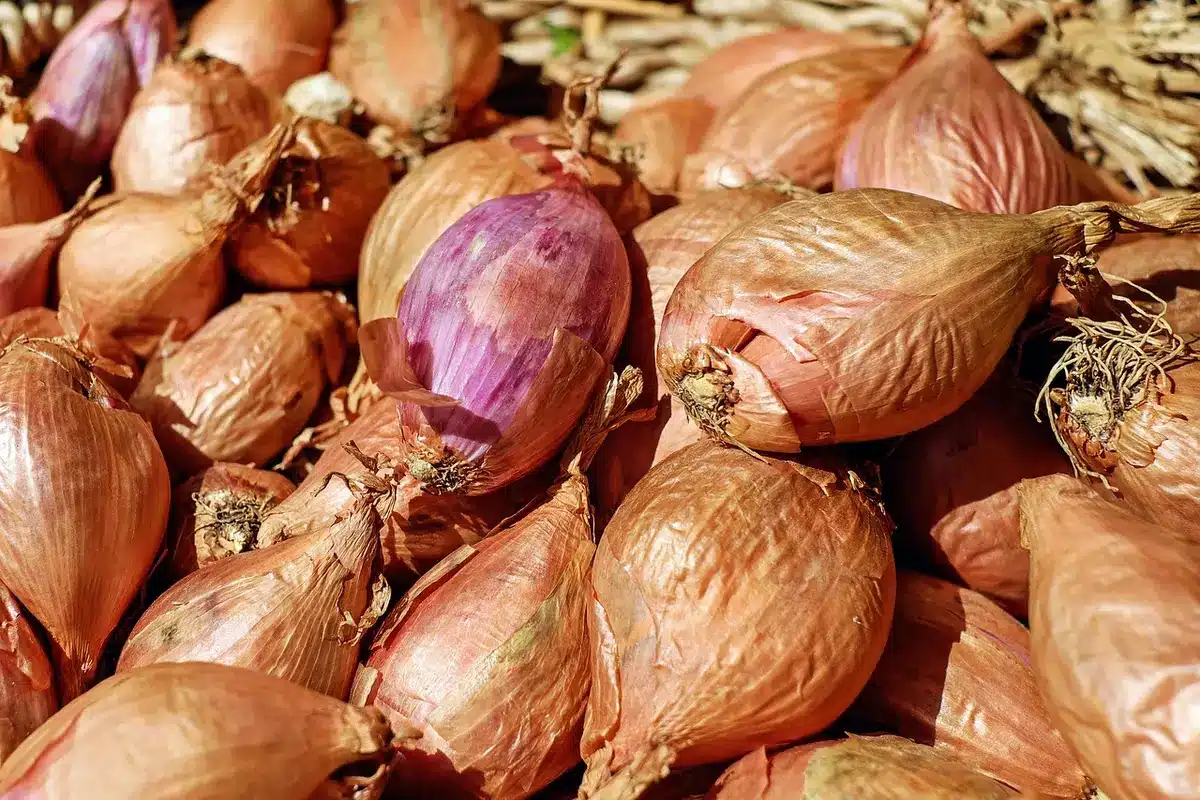
For caramelizing, onions are forgiving and develop deeper sweetness the longer they cook. Shallots brown faster and can burn more readily, so use lower heat and closer attention.
If you’re using onion raw but want a milder finish, rinse the chopped onion briefly under cold water and dry before adding; the water blunts some of the sulfur compounds.
Storage and prep
Store both in a cool, dry, ventilated place. Once peeled or chopped, keep refrigerated in a sealed container and use within a few days for best flavor. To mellow raw bite quickly, soak slices in cold water for 10–15 minutes before draining and using.
Quick checklist before you swap
- Is the ingredient used raw or cooked? Raw favors shallots.
- Do you want a subtle note or a pronounced onion flavor?
- Can you adjust cooking time if you use the other bulb?
- Are you willing to taste and tweak quantities?
Substituting shallots and onions is less about strict equivalence and more about matching intensity and technique. Start conservatively when swapping, give yourself a chance to taste as you cook, and you’ll retain the dish’s intended character—whether it’s a bright dressing or a deeply savory stew.
Andy Puzder blasts White House over gas spike: doubts claim that relying on OPEC lowers emissions
Cheap American beer under $10: top 6-pack buys to stock up now