Show summary Hide summary
You don’t need hours or exotic ingredients to bring confident Indian flavors to a weeknight dinner. With a handful of reliable pantry items and a few targeted techniques—like toasting spices or blitzing a creamy sauce—home cooks can create bold, restaurant-quality dishes in 20–30 minutes.
Why this matters now
Busy schedules and tighter grocery budgets have pushed many people to cook more at home, but appetite for vibrant, plant-forward meals has only grown. Indian dishes scale well for vegetarians, make economical use of pantry staples, and deliver strong flavor without long preparation times—so they’re a practical choice for frequent weeknight cooking.
Inglewood lounge aims to draw year-round crowds: not just a pregame spot for Intuit Dome
Brown butter upgrade: golden nutty version elevates taste and versatility

Pantry essentials (and fast substitutes)
Stocking a few items transforms a basic stir-fry or sheet-pan meal into something unmistakably Indian. The table below lists versatile staples, what they do, and quick swaps if you don’t have them on hand.
| Staple | Why it helps | Quick substitute |
|---|---|---|
| Garam masala | Warm, rounded finishing spice—adds depth at the end | Mix equal parts ground cumin and cinnamon with a pinch of cloves |
| Cumin seeds | Toasted in hot oil, they create an aromatic base for many sauces | Ground cumin, added earlier to the oil |
| Ground turmeric | Color and mild earthiness; subtle bitterness balances dairy | Skip if you have saffron (small pinch) or extra paprika for color |
| Tomato purée or canned tomatoes | Forms the body of many curries; quick to cook down into a sauce | Tomato paste diluted with water |
| Yogurt | Adds tang and tenderizes protein in quick marinades | Buttermilk or thin coconut milk (for dairy-free) |
| Frozen ginger-garlic paste | Instant aromatic boost—no peeling or mincing | Fresh grated garlic and ginger, or jarred paste |
| Canned coconut milk | Silky richness for curries and creamy sauces | Evaporated milk or cashew cream (soaked & blended) |
Small techniques that change everything
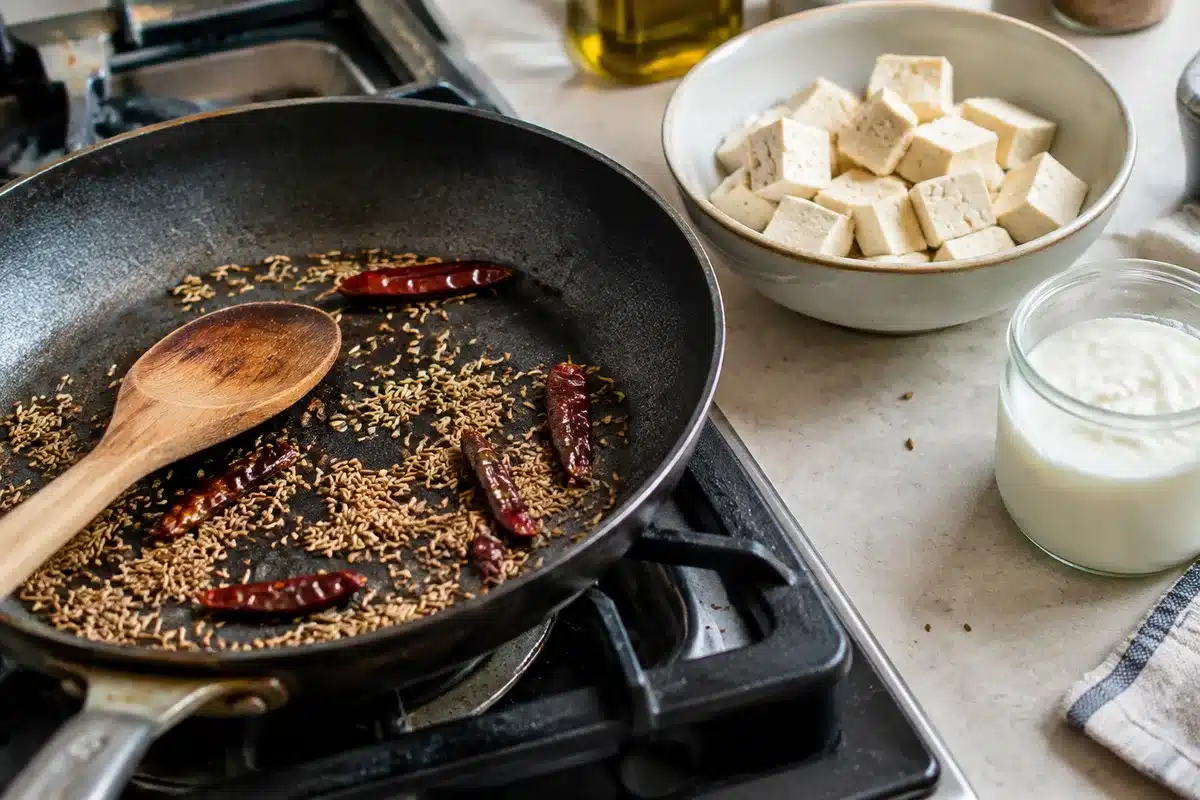
Two-minute habits yield big returns. Begin by heating oil until it shivers and then add whole spices—this is called tempering; it unlocks volatile aromas that powdered spices can’t match. Bloom ground spices in the hot oil for 30–60 seconds before adding tomatoes to prevent a raw, dusty taste.
Use yogurt or an acid like lemon to quickly marinate tofu, paneer, or chicken for 10–20 minutes. It’s enough time to impart flavor and improve texture without a long sit. For sauces, a quick blitz with an immersion blender creates a smooth, clingable finish with minimal fuss.
- Toast whole spices briefly in a dry pan to amplify aroma.
- Bloom ground spices in hot oil to remove raw edge.
- Use yogurt-based marinades for fast tenderizing (10–20 minutes).
- Finish with garam masala or a squeeze of lemon for lift.
- Oven or air-fryer-roasted vegetables add smoky depth in less time.
A quick tofu tikka-style skillet in about 25 minutes
This template shows how to turn staples into a satisfying weeknight main. Proportions are flexible—think of it as a method rather than a strict recipe.

Start by pressing and cubing firm tofu. Toss it with a spoonful of yogurt, a teaspoon of turmeric, a teaspoon of ground cumin, and half a teaspoon of chili powder; let sit while you heat the pan. Sear the tofu until golden and set aside.
In the same pan, warm a tablespoon of oil, add a teaspoon of cumin seeds until they sizzle, then stir in a tablespoon of ginger-garlic paste. Add a cup of chopped tomatoes or canned tomato purée, simmer for five minutes, then stir in a splash of coconut milk or extra yogurt to make the sauce silky. Return the tofu, simmer for a few minutes to absorb flavor, and finish with a sprinkle of garam masala and lemon juice.
Putting it on the table
Pair this kind of dish with quick-cooking rice, store-bought naan warmed in the oven, or a simple salad. Leftovers often taste better the next day as flavors continue to meld—another win for busy cooks planning lunches.
Small investments in a few spices and one or two techniques will expand what’s possible on a weeknight. The goal isn’t to recreate restaurant complexity, but to get reliable, robust results quickly—so you eat well without turning the evening into a production.
Zero-sugar coffee creamer flops: shoppers warn against popular store brand
Indian recipes: slow-cooked depth, ready in under an hour