Show summary Hide summary
When time is tight, the way you thaw ground beef can cut minutes off dinner — or add a food-safety risk. We put five common thawing approaches through a practical home test to identify which methods balance speed, texture and safety for everyday cooks.
Our goal was simple: find the fastest safe options and the ones to avoid. We compared each method for thawing a typical 1-pound (450 g) package of ground beef, judging how long it took, how evenly the meat thawed, and whether the texture or safety were compromised.
What we tested and why it matters now
Inglewood lounge aims to draw year-round crowds: not just a pregame spot for Intuit Dome
Brown butter upgrade: golden nutty version elevates taste and versatility
With more people preparing meals at home and grocery runs less frequent, safely thawing meat matters more than ever. Ground beef is especially sensitive because it has a large exposed surface and can warm through quickly, creating ideal conditions for bacterial growth if handled poorly. In our tests we examined: the refrigerator, sealed cold-water submersion, the microwave defrost function, thawing at room temperature on the counter, and running hot water. Each was evaluated for speed, convenience and risk.

Key takeaway
For everyday use, thawing in the refrigerator is the safest and most consistent method. If you need a faster option without sacrificing safety, submerging the meat in cold water while sealed in a leak-proof bag is the best compromise. The microwave works in a pinch but often leaves edges partially cooked and must be followed by immediate cooking. Avoid leaving ground beef out on the counter or using hot water — both increase the likelihood of bacterial growth in the danger zone (above 40°F / 4°C).
How each method performed
- Refrigerator thawing — Time: 12–24 hours for a 1 lb pack. Pros: safest, most even thaw, no texture damage. Cons: slow; requires planning ahead. Practical tip: place the package on the bottom shelf in a tray to catch drips and prevent cross-contamination.
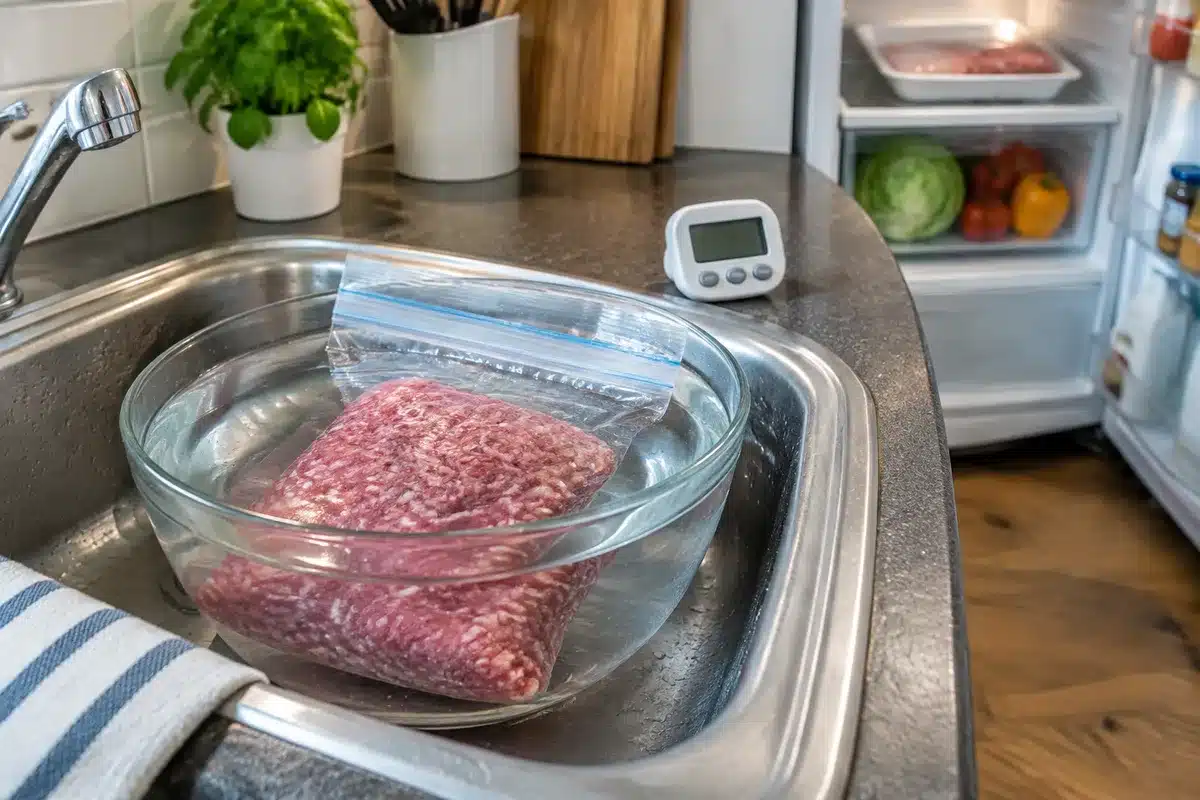
- Cold-water submersion (sealed bag) — Time: about 30–60 minutes per pound. Pros: fast and safe when done correctly; preserves texture. Cons: requires a watertight bag and regular water changes if the bag is not fully submerged in cold running water. Practical tip: change the water every 30 minutes and cook meat immediately after thawing.
- Microwave defrost — Time: a few minutes depending on wattage and package size. Pros: quickest. Cons: uneven thawing and partially cooked margins that alter texture and flavor; must be cooked immediately after defrosting. Practical tip: use the microwave’s defrost setting and rotate or break apart the meat as it softens.
- Room-temperature counter thawing — Time: varies. Recommendation: do not use. Rationale: outer layers reach unsafe temperatures well before the interior thaws, increasing bacterial risk. This method consistently failed our safety criteria.
- Hot or warm water — Time: rapid. Recommendation: do not use. Rationale: hot water quickly warms the meat into the danger zone, accelerating bacterial growth and increasing food-safety risk.
Quick comparison table
| Method | Approx. time (1 lb) | Safety | Texture |
|---|---|---|---|
| Refrigerator | 12–24 hours | Excellent | Best |
| Cold-water (sealed) | 30–60 minutes | Good (if water kept cold) | Very good |
| Microwave | Several minutes | Acceptable (if cooked immediately) | Variable (edges may cook) |
| Counter (room temp) | 1–4 hours | Poor | Poor |
| Hot water | Minutes | Poor | Poor |
Safety and cooking reminders
Regardless of the thawing method, cook ground beef to an internal temperature of 160°F (71°C) to ensure harmful bacteria are destroyed. If you use the microwave or cold-water methods, plan to cook the meat immediately after thawing; do not refreeze meat that has been fully thawed unless it has been cooked first.
Also: never allow thawed ground beef to sit for more than two hours at room temperature (one hour if ambient temperatures exceed 90°F / 32°C). When refrigerating to thaw, keep the meat on the lowest shelf in a sealed container to protect other foods from contamination.
Bottom line
If you can plan ahead, use the refrigerator — it’s the most reliable way to preserve texture and minimize risk. When time is limited, sealed cold-water thawing offers a quick, safe alternative. Reserve the microwave for last-minute rescues and avoid counter- or hot-water methods entirely.
Quick checklist for safe thawing:
- Refrigerate when possible — overnight is best.
- For faster thawing, submerge in cold water in a leakproof bag and cook immediately.
- Use the microwave only if you’ll cook the meat right away.
- Never thaw on the counter or in hot water.
- Always cook ground beef to 160°F (71°C).
Zero-sugar coffee creamer flops: shoppers warn against popular store brand
Indian recipes: slow-cooked depth, ready in under an hour