Show summary Hide summary
Why does a jar of homemade strawberry jam sometimes grow a fuzzy layer of mold within weeks while a commercial jar lasts months? The answer is not simply sugar or sterilization — it’s the science of water activity, a controlling factor in whether microbes can grow and food stays safe and palatable.
What water activity actually measures
Water activity (aw) gauges the portion of water in a food that is free to support microbial growth and chemical reactions. It is different from total moisture: two foods can contain the same amount of water but have very different aw values depending on how that water is bound to sugars, salts, or other molecules.
Caramel, butterscotch, toffee: how their differences affect your desserts
McDonald’s rebrands Twitter to honor Bubba Wallace after his first NASCAR Cup win
In practical terms, aw predicts which organisms can multiply. Most bacteria need values above about 0.90, many yeasts stop growing below roughly 0.88, and molds slow dramatically as aw approaches 0.80. That is why reducing aw is a cornerstone of preservation.
Why this matters now
Consumers are making more food at home, from jams to fermented pickles, and interest in reducing food waste has never been higher. Understanding water activity helps home cooks and small producers make safer, longer-lasting products without relying solely on refrigeration or preservatives.
Strawberry jam as a practical example
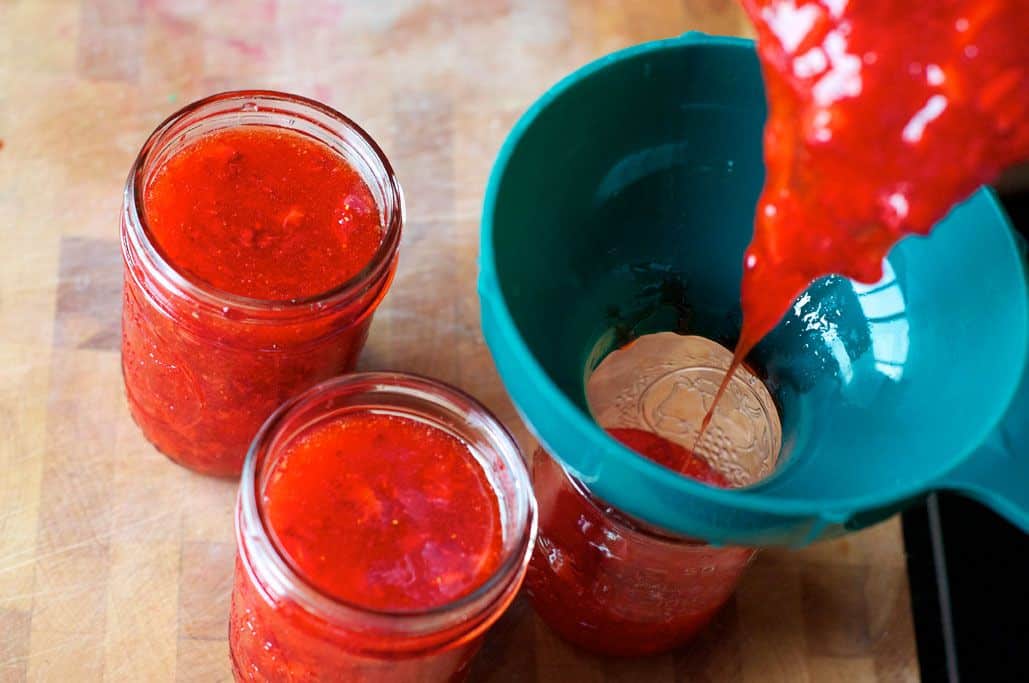
Strawberry jam combines fruit water, sugar, and often pectin. When cooked to the right concentration, much of the water becomes unavailable to microbes because the sugar binds free water — a process called osmotic preservation. But a jam that is undercooked, watered down, or contaminated during handling can retain a higher aw and spoil faster.
Commercial preserves are formulated and processed so their aw, acidity, and packaging meet standards for shelf stability. Homemade jars can be shelf-stable too, but that requires either following tested recipes and processing steps or keeping the product cold.
Practical ways to control water activity
- Cook down to concentrate sugars and reduce free water; follow a trusted recipe for correct sugar-to-fruit ratios.
- Add humectants like sugar or salt that bind water and lower aw (used widely in jams, cured meats, and some baked goods).
- Remove water by drying or dehydrating to reach aw levels inhospitable to microbes.
- Use fermentation to both acidify and lower aw in certain products, which together inhibit spoilage organisms.
- Freeze for quality preservation — freezing immobilizes water and stops microbial growth, but does not necessarily change aw once thawed.
- Follow safe handling and packaging: jars, lids, and processing (hot-fill or water-bath canning where appropriate) reduce contamination risk.
Quick reference: typical water-activity ranges
| Food or product | Typical aw range | Preservation note |
|---|---|---|
| Fresh strawberries | ~0.98–0.99 | Very perishable; refrigeration needed |
| Strawberry jam (properly cooked) | ~0.80–0.90 | Lower aw limits yeast/mold; shelf-stable if processed correctly |
| Honey | <0.60 | Extremely low aw; microbes generally cannot grow |
| Dry fruit | ~0.60–0.75 | Stable at room temp if moisture not reintroduced |
| Cured meat | ~0.85–0.95 | Salt and drying lower aw; additional measures often required |
Water activity is a simple concept with wide implications: it helps explain why some foods spoil quickly, why others keep for months, and how to design recipes and storage to limit waste. For anyone making preserves, the takeaway is clear — controlling the availability of water, along with proper acidity and hygiene, is as important as the fruit you start with.
Irish whiskey: approachable bottles new drinkers should try today
Fishtown restaurants ranked: must-visit spots locals are raving about